Spring 2026
9 April, 2026
The Spring 2026 anime season, for isekai fans, stands out for its many new continuations. I count only three new titles… but also three season 2s, a season 3 (and a 2nd one, if one counts beatbreak, although that’s continuously running) and an impressive four season 4s! It’s nice to see, in this era where one or two cour anime are the norm, that many isekai titles are still going beyond, sometimes well beyond, the 52 episode mark that used to be almost an industry standard. Tensei shitara Slime Datta Ken and Mairimashita Iruma-kun! will even have more episodes than Rurouni Kenshin when this season concludes, and more than Kidou Senshi Gundam and Kidou Senshi Zeta Gundam put together.
Megami "Isekai Tensei Nani ni Naritai desu ka" Ore "Yuusha no Rokkotsu de", if the rest of the series can live up to its first episode, might be a legitimate competitor to Konosuba for the title of “funniest isekai anime”. Rokkotsu has a very different sense of humor, however; it’s much more absurdist and not nearly as character driven. It almost reminds me of Excel Saga, and just like that title, it kills off the main character multiple times in the first episode.
But if you can’t appreciate a guy getting truck-kuned… and smacked with a meteor seconds later, and a later flashback revealing that he was also chased by bears and yakuza on his way there, I don’t know what to tell you, except that we have very different ideas of what’s funny.
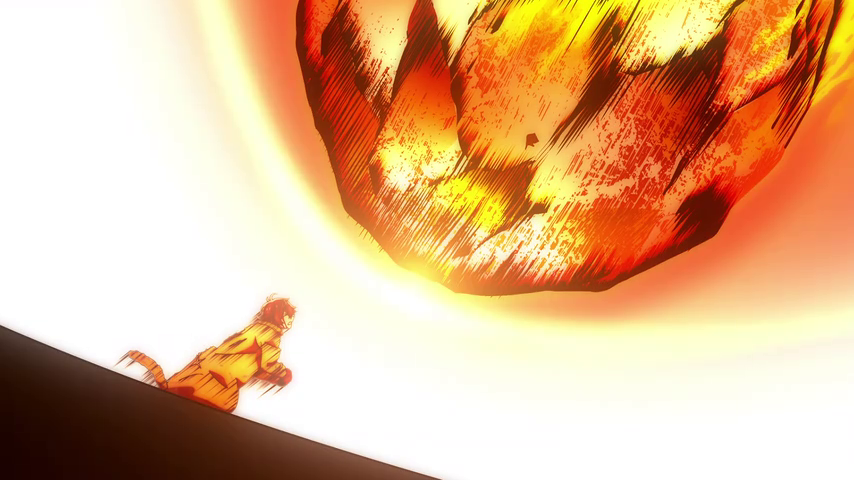
Anyway, once he’s dead he gets to pick what to reincarnate as… except it comes with a wait time, and there’s a long, long line for anything good. I like Naofumi’s anime, but I don’t think it’s quite worth this long a wait...
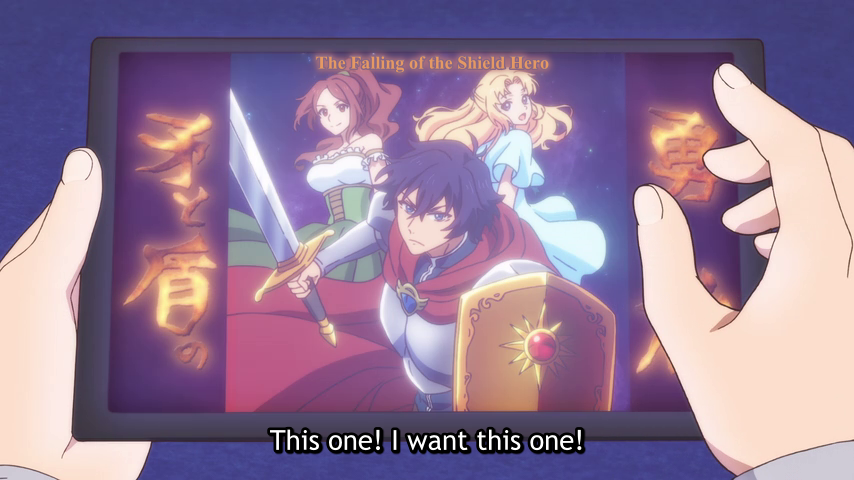
So he tries a hero’s rib, thinking that at least he’d get to feel heroines hugging him. Unfortunately, when the hero rejects the heroine, he confesses, freaking everyone out. The hero tries to rip him out, except he got the wrong rib, and the rejected rib turns into a hero of his own, battles, and wins… so the other ribs do likewise in a destructive 24-way battle royale.
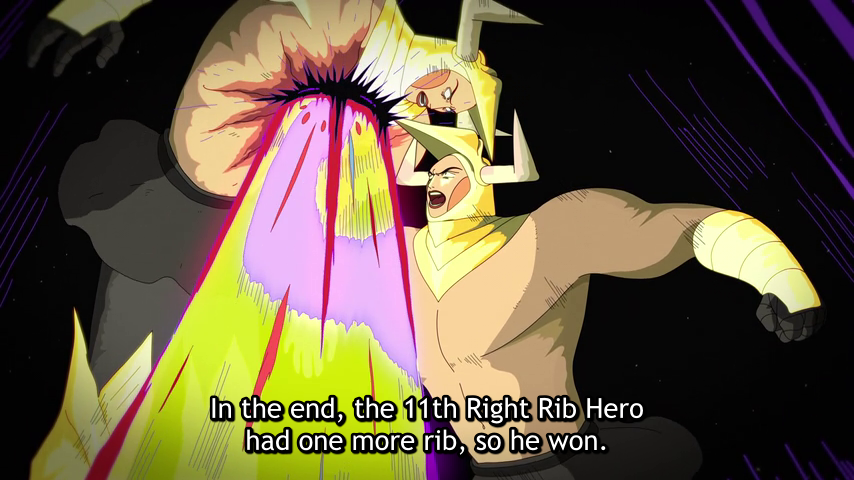
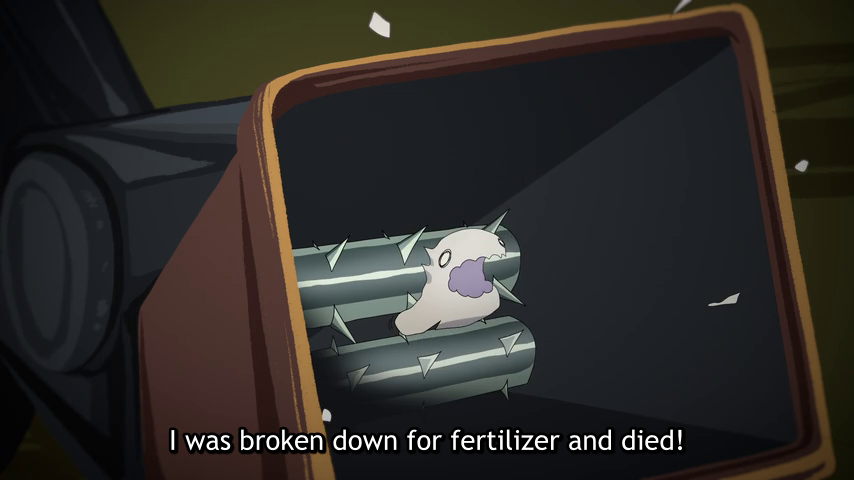
The main character stays out of it, avoids the carnage, and gets picked up by a beast girl from the hero’s harem as a chew toy… He’s happy like this, until a gardener girl grinds him up for fertilizer. I promise that it’s even sillier than it sounds and I’m not doing this show justice, but I laughed my head off.
Next week we’ll see what he gets up to as a hermit crab.
Saikyou no Shokugyou wa Yuusha demo Kenja demo Naku Kanteishi (Kari) Rashii desu yo? is actually the 3rd narou-kei title, if only the 2nd isekai, to feature an appraiser as the main character.
There’s a good reason that most video games do not show the exact statistics, attributes, and special abilities of one’s opponent. In any competition, information is power, and in the right hands a mere stat sheet is an extremely powerful tool. Tensei Kizoku Kantei Skill de Nariagaru’s Ars Louvent is able to surround himself with some of the world’s most talented retainers simply by identifying and recruiting them. Kanteishi’s Manabe Hibiki, on the other hand, is a scared, short, and lost teenage boy, without much in the way of genre savvy, let alone the benefits of an aristocratic education. But at least he can contribute this much to an adventuring party; when a battle is life or death, it is all the more important to know the opponent’s weakness, or simply to know that one needs to run away.
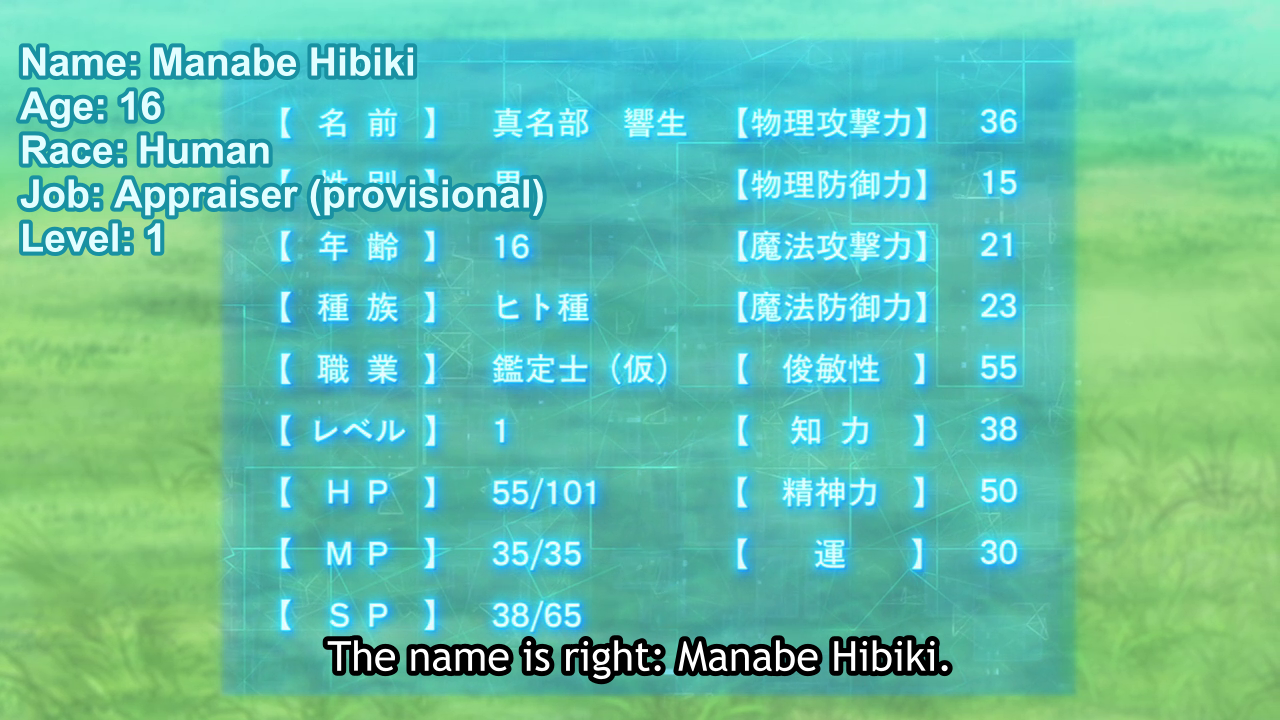
Anyway he gets rescued by Emalia, who I think can fairly be described as a “big titty elf”; there’s a running gag with the button on her shirt getting snapped off by her breasts, and another with chest level hugs.
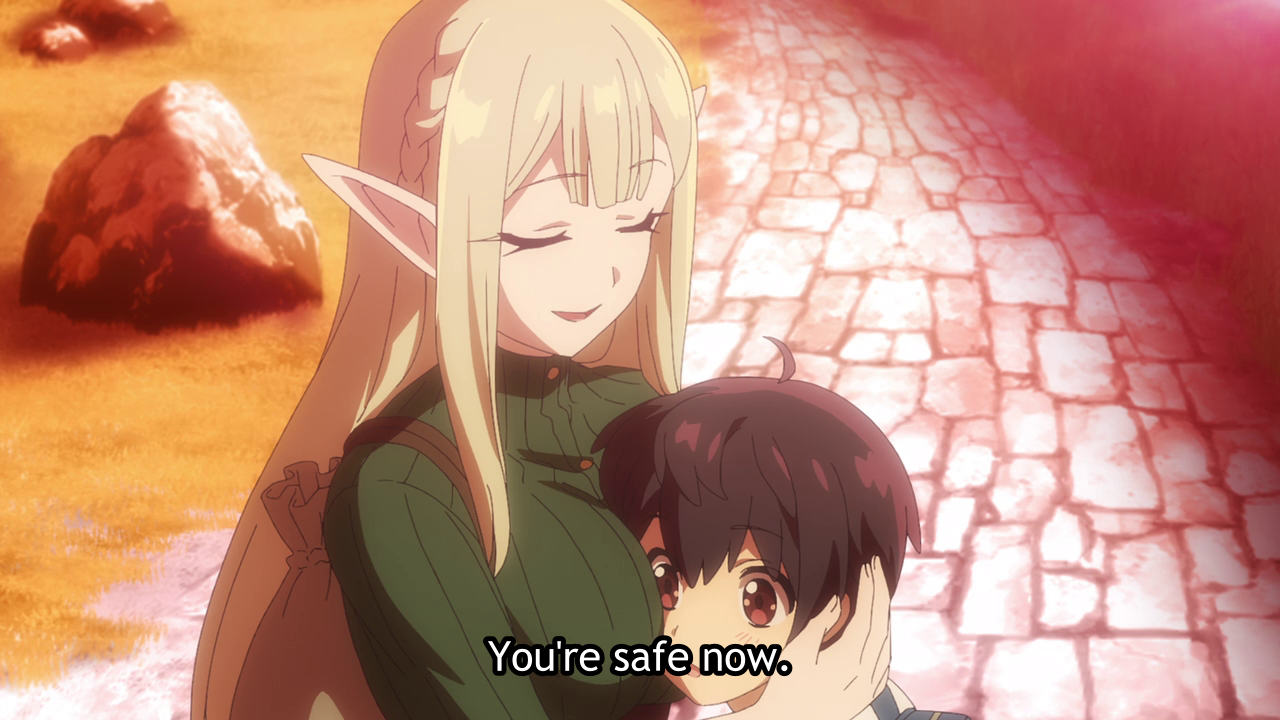
A young (by elven standards) 56, she has never been in an adventuring party herself; there’s hints of friendship and romance developing, if the two can ever properly express their feelings. At least Emalia’s looking out for Manabe; he probably needs it.
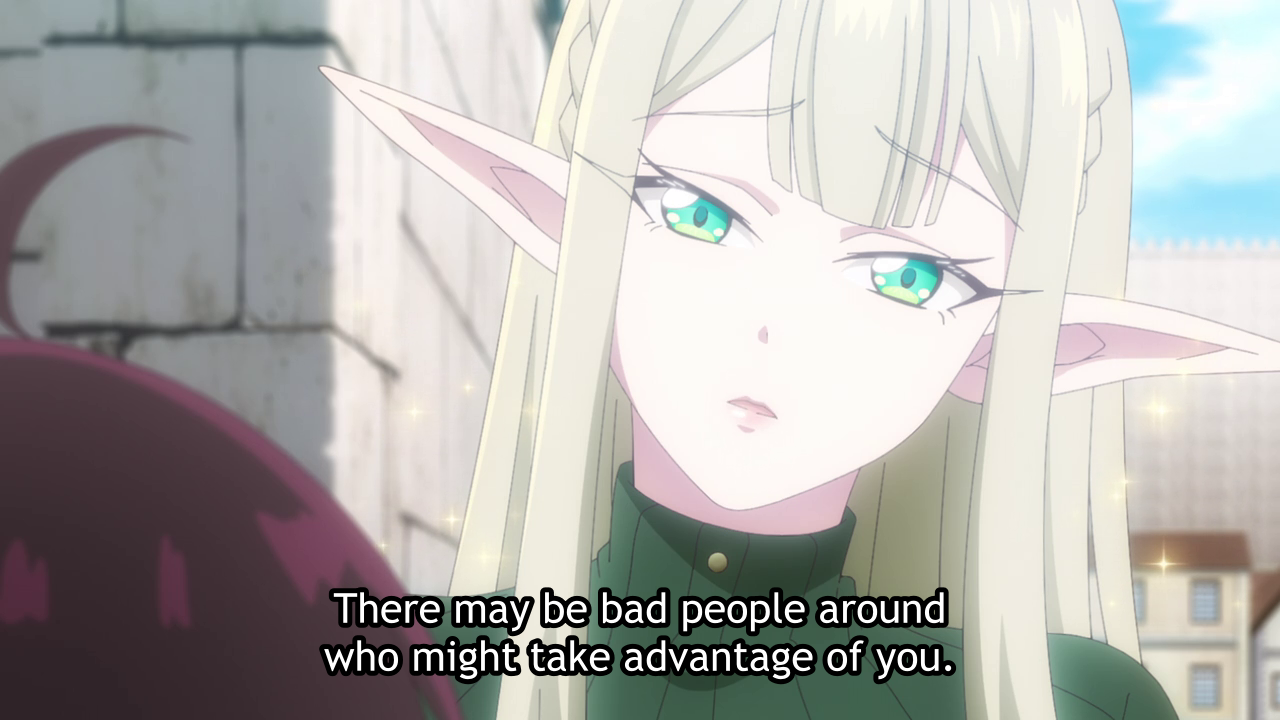
The 2nd episode takes us to a city whose name is given as “Rowell” in the subtitles, but I believe that “Lowell” is the correct reading. The two are identical in Japanese, but the former has never, insofar as I'm aware, been used as a toponym elswhere, while the latter name belongs to a city in Massachusetts, famous for its role in the Industrial Revolution.
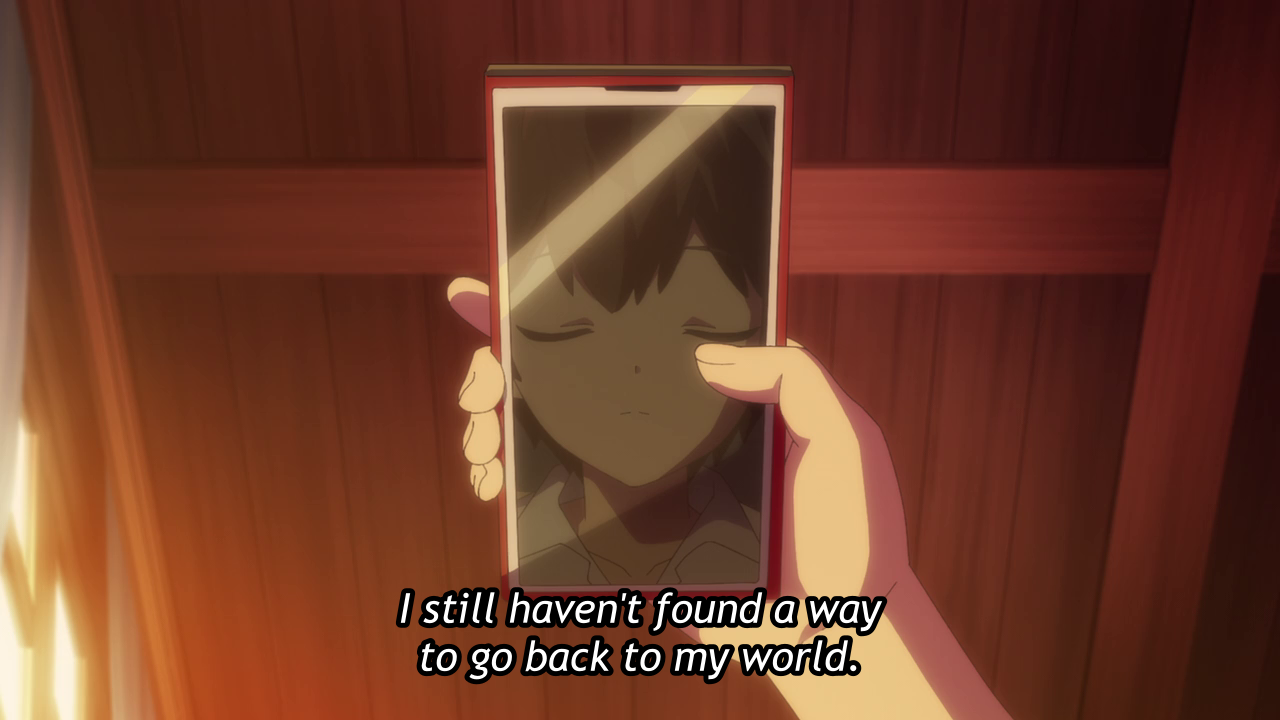
Anyway, Hibiki parts from Emalia, who has to take a quest back home. Meanwhile, he’s worried about of money, having only what he got from their rabbit hunting quest together, and his phone battery is dead - no smartphone shenanigans in this show.
 But he joins the adventurer’s guild, gets his hands on a medical book, and contracts with other adventurers to channel their MP and regrows the limbs of one of their badly injured companions. Things are looking up for him.
Still, a wolf at the episode’s end suggests trouble is coming next week… or maybe just more adventures.
I’m not particularly impressed so far by this title, but the characters are likable – Hibiki’s weakness might make things a bit of a challenge for him, and Emalia isn’t just a gag character, she has her competent adventurer side too, and a bit of gap moe when she fails to live up to it.
Jishou Akuyaku Reijou no Konyakusha no Kansatsu Kiroku is a villainess series… except that, as the title shows, the villainess is not the point of view character, but his fiancee! Bertia is a fairly typical example of the type, all things considered; she loves otome games, gets reincarnated into one, is trying to avoid her house’s ruin, and the scenario isn’t exactly as she predicted – we’ve all heard that before.
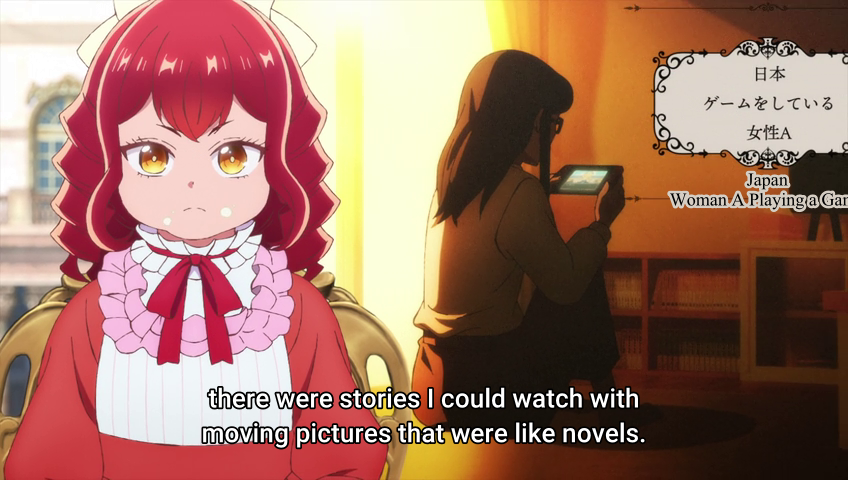
What differs in her case is that she’s not very good at hiding this fact, or perhaps too young in this incarnation to realize she was supposed to do so, and that her ability confuses the hell out of the protagonist. The line between being a reincarnated otherworlder and just an insane person isn’t all that thick, huh…
The protagonist, Cecil, is if anything more compelling; the episode opens with him solving unknown math theorems at ten years old, and he goes on to stop a disease epidemic before it starts.
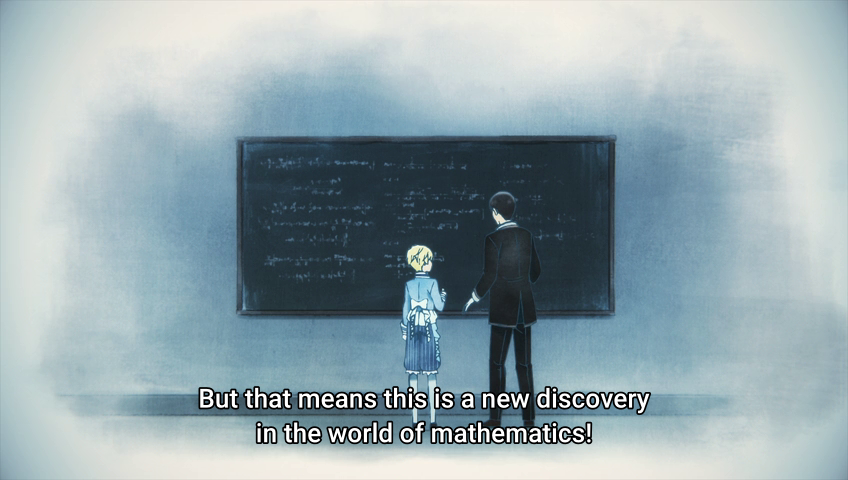
But she’s the only thing in this world that the boy genius Cecil doesn’t understand… maybe there’s romance in there somewhere, or maybe it’s simply a world outside the projected scenario, represented by Bertia, which finally gives him a challenge. I guess we’ll see what comes of it; the post-credits scene, with the likely real heroine rescuing a bird and remembering something, at least gives a hint of what’s to come.
Higeki no Genkyou to Naru Saikyou Gedou Last Boss Joou wa Tami no Tame ni Tsukushimasu. is also a villainess title, and returns this spring for a season 2. Insofar as it stands out within the genre, it is by playing the scenario very straight, with little in the way of comedy or even cute romance moments to lighten the mood; instead, audiences get to witness “flashbacks” of a sort to the game’s timeline, in which the protagonist, Pride Royal Ivy, very much lives up to her villainess billing.
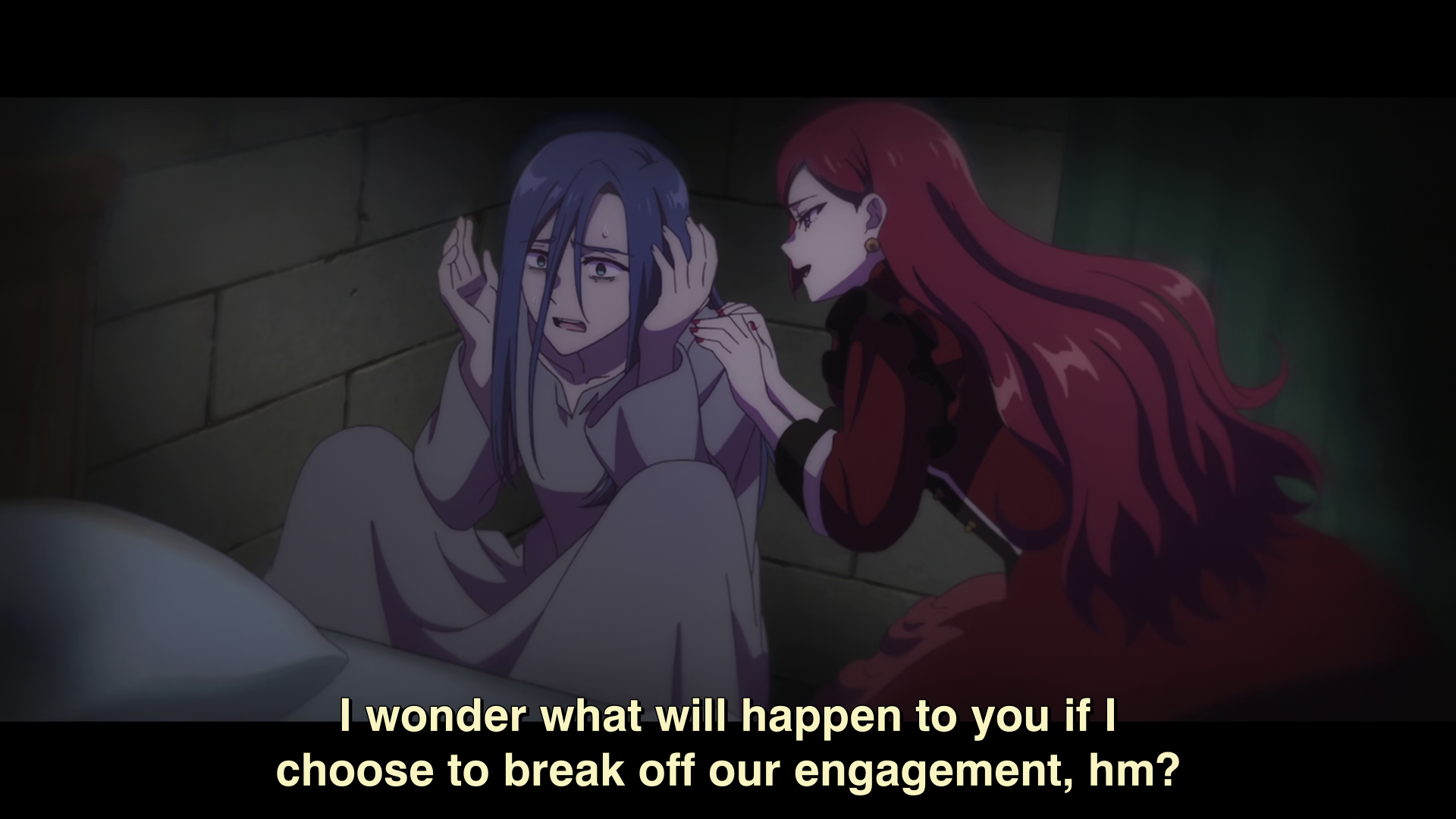
Anyway, this episode introduces a new fiancee, and even a bit of a romantic rivalry over her, despite Pride’s efforts to step back and have her younger sister, the intended heroine, inherit the throne.
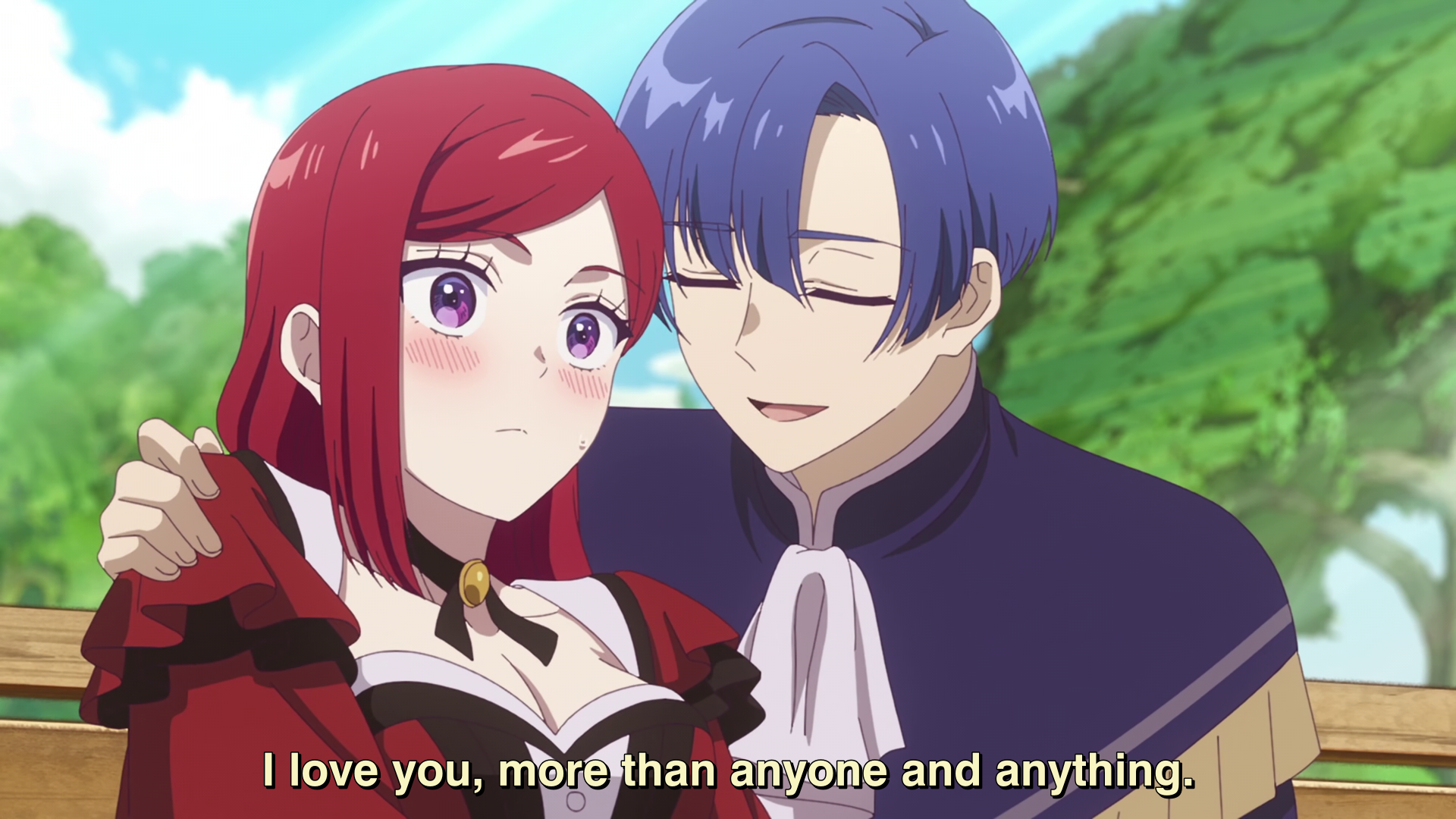
Can she really avoid her inevitable fate? Almost certainly, as she’s done nothing evil in this timeline and instead is just setting up a public education system, and there’s no Tearmoon Teikoku style revolution to avoid.
Isekai Nonbiri Nouka returns for a second season this spring. The first season became markedly less original after the first couple episodes; the main character still has a magic farming tool of a kind I’ve never seen, and the title still has something of an agricultural focus, but protecting one’s isolated isekai village is a feature of Re:Monster and Tensei shitara Slime datta ken (also returning this season!) along with many other series, more than I could hope to name. Admittedly, Nonbiri Nouka’s village is considerably shifted towards demihumans over the monsters typical in the subgenre.
Still, it’s a charming title with a main character who’s easy to root for, and its nice to watch characters from afar join his village, and often his harem, one by one – along with an equally ever-expanding supply of cute animals.
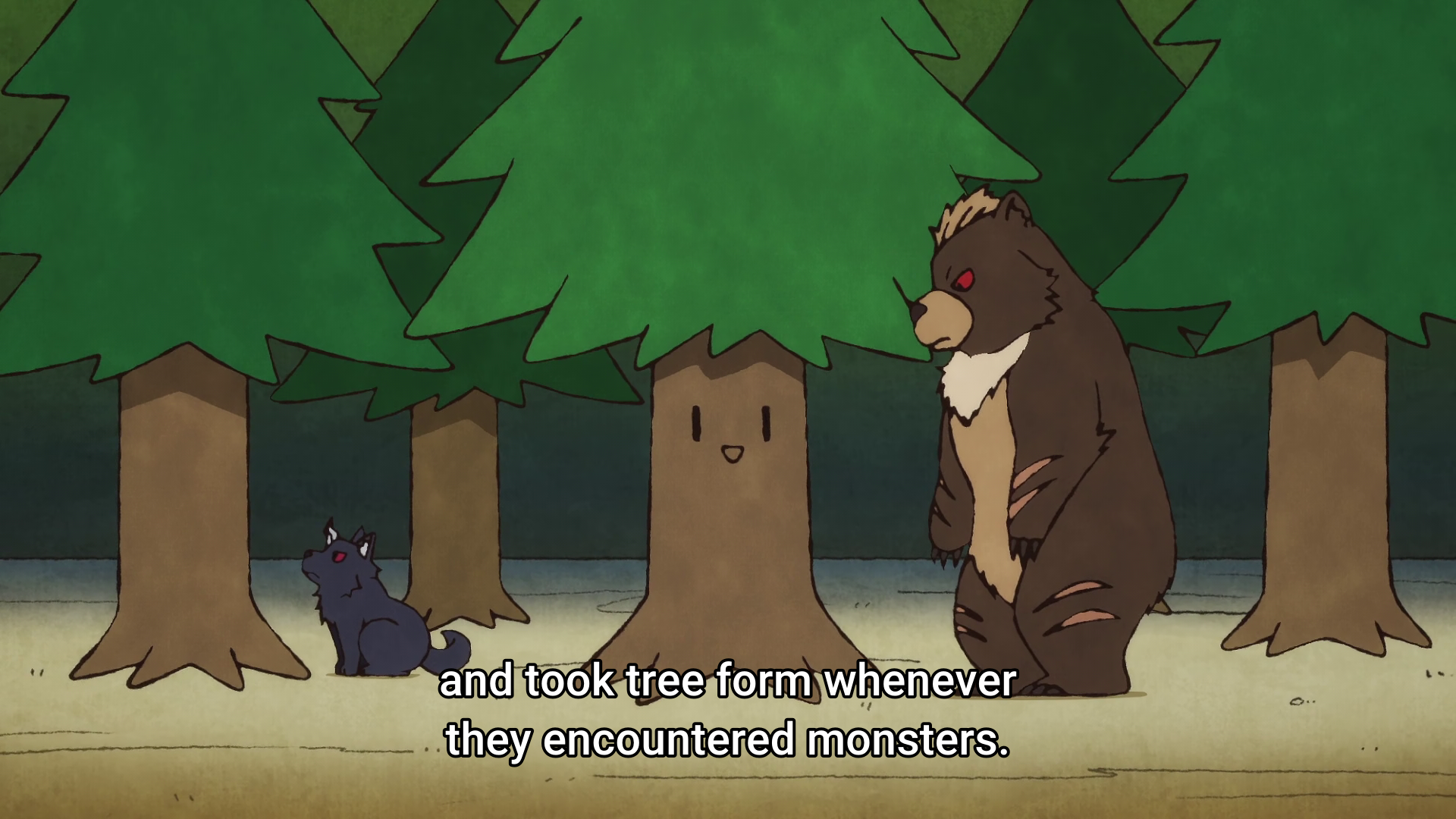
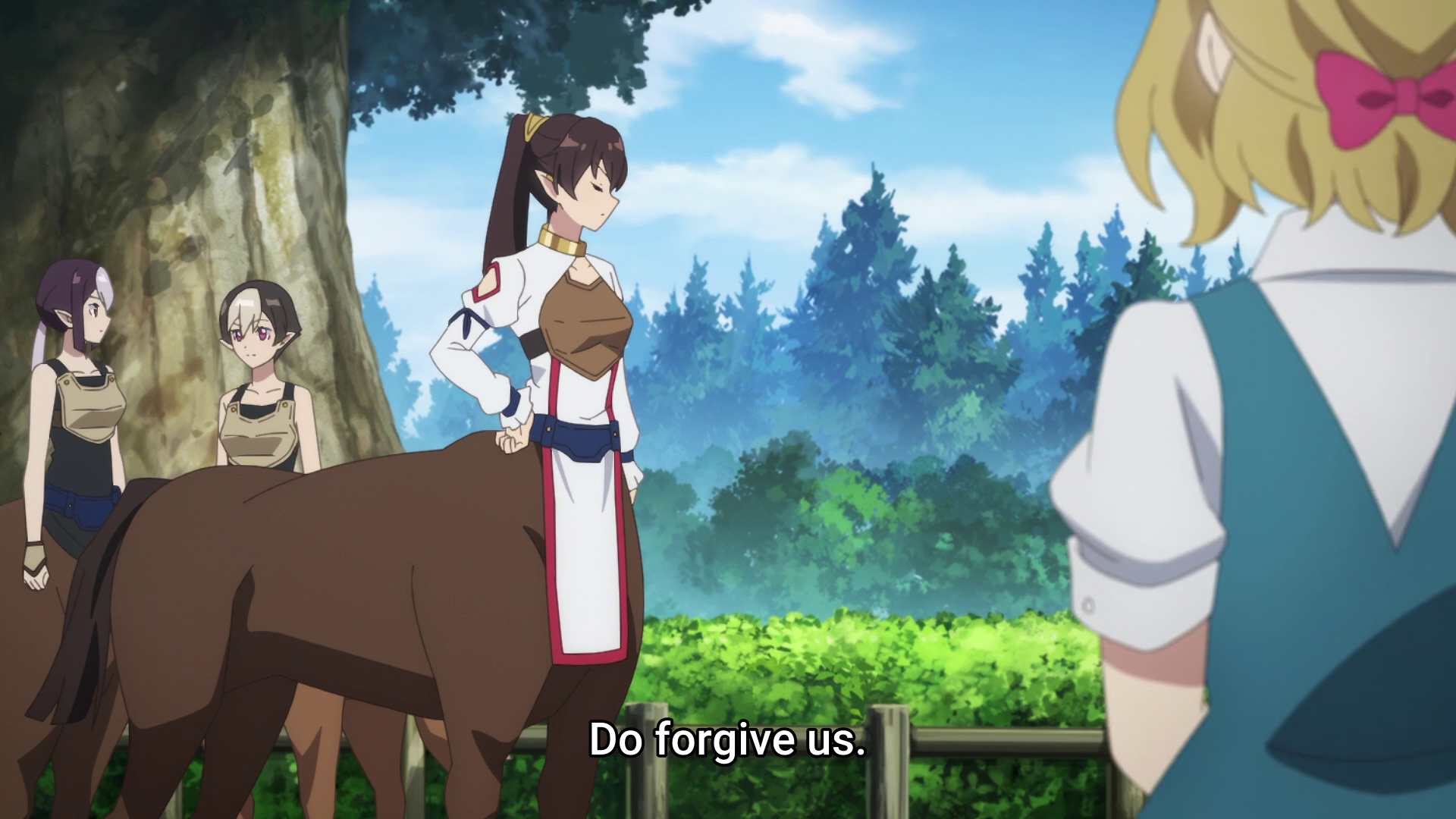
Season 2 begins with the concept of a single village put into question; with the news of a hundred refugees arriving shortly. They make a separate but nearby settlement, across the river, with a bridge too small to let monsters cross. Unfortunately, no one told them that the refugees were centaurs, and they built everything at a normal size… minotaurs are coming too, but they haven't been shown yet.
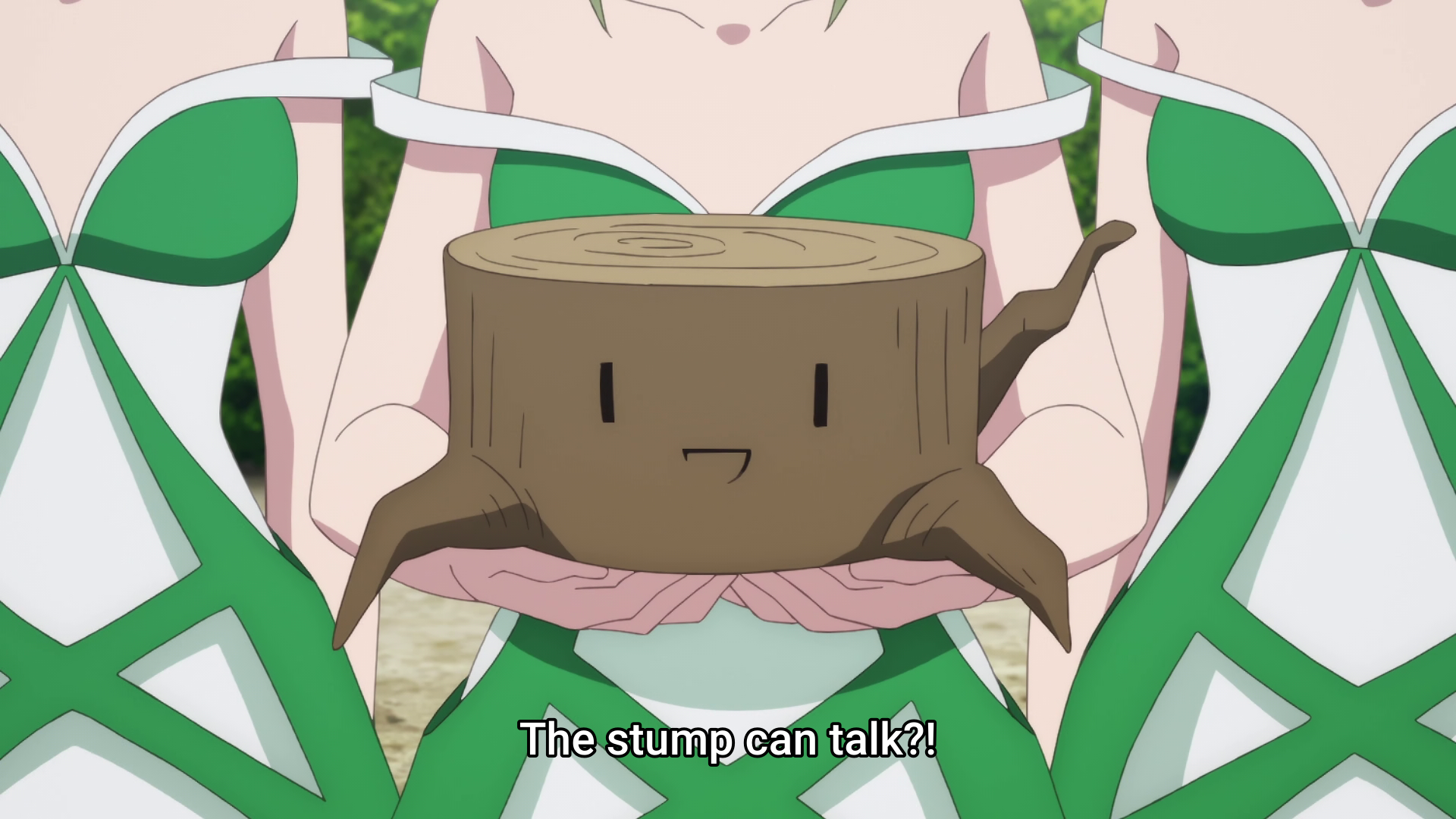
 After some tough negotiations, involving pulling rank and centaur haughtyness, some nyunyu daphne join them. These are plant girls, in need of water, soil, and sunlight. So the separate settlement remains empty for the time being.
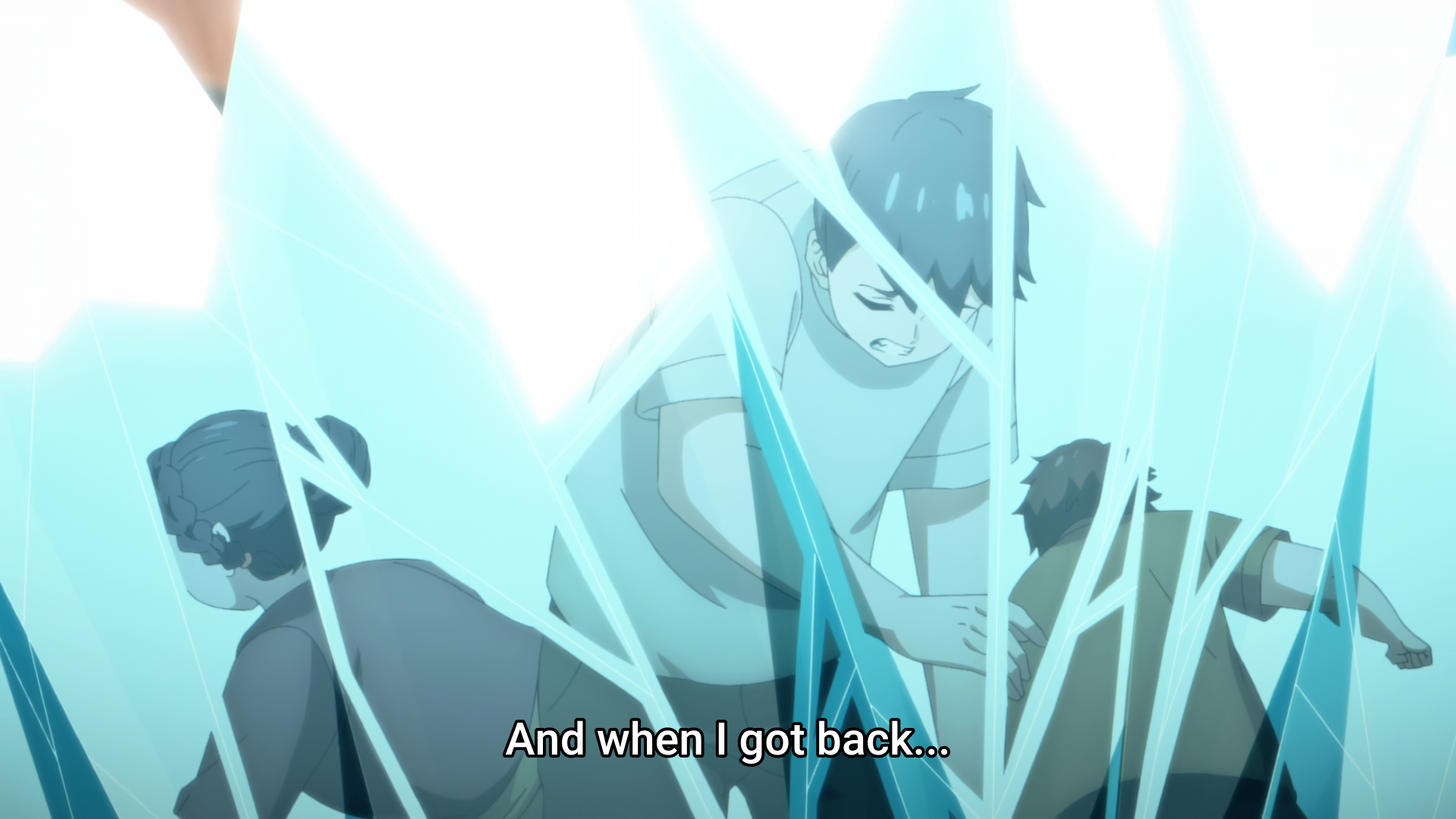
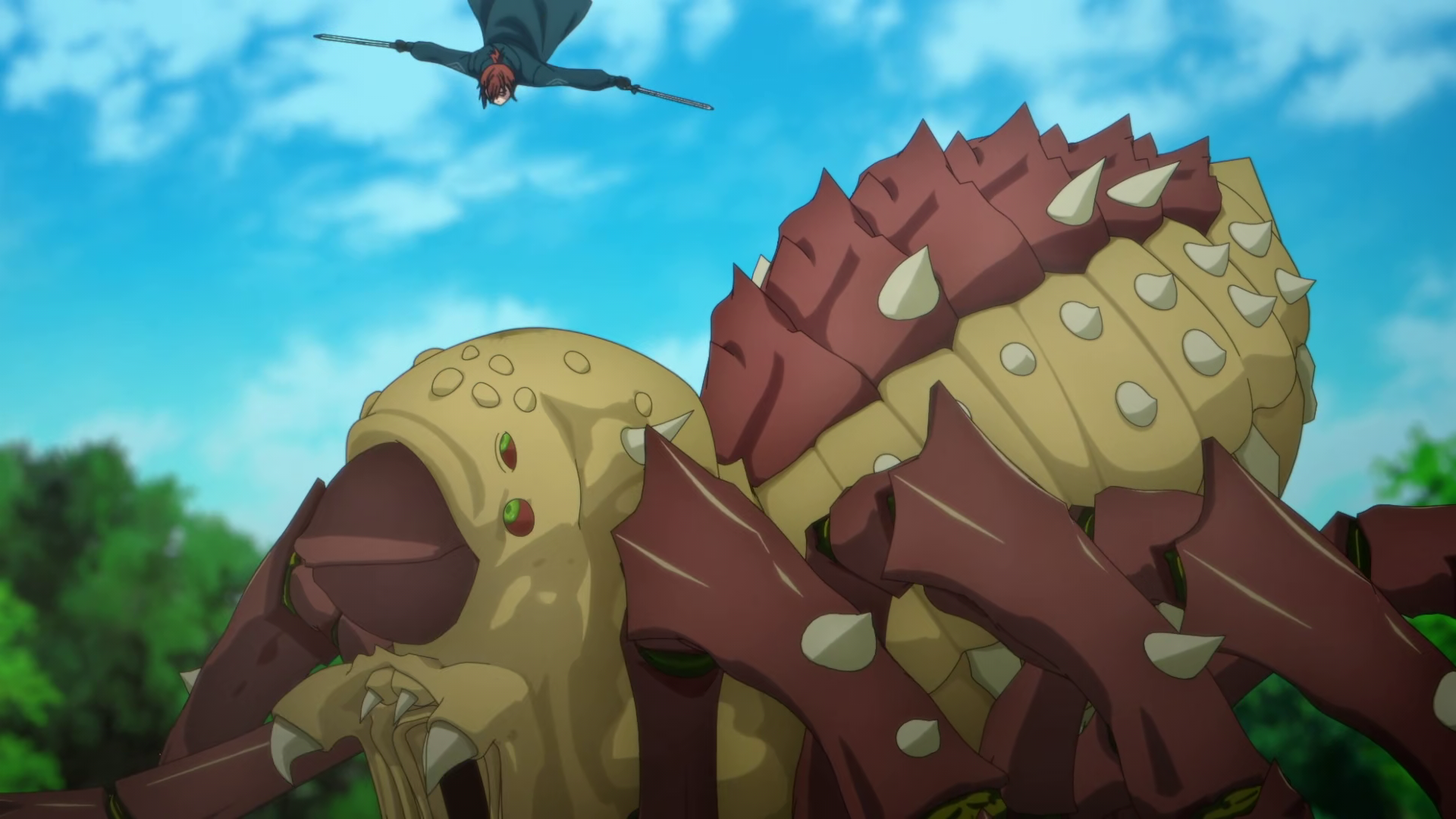
Saikyou no Ousama, Nidome no Jinsei wa Nani wo Suru?, or, to use the English title (as it adapts an American web novel) The Beginning After the End also returns for a 2nd season. After a long stay with the elves, Arthur has returned to adventuring, teaming up with Jasmine to save a village from an Arachne that froze the place – an opponent she had been 1 for 5 against, with a substantially larger party. His parents scold him over taking on such a risky challenge.
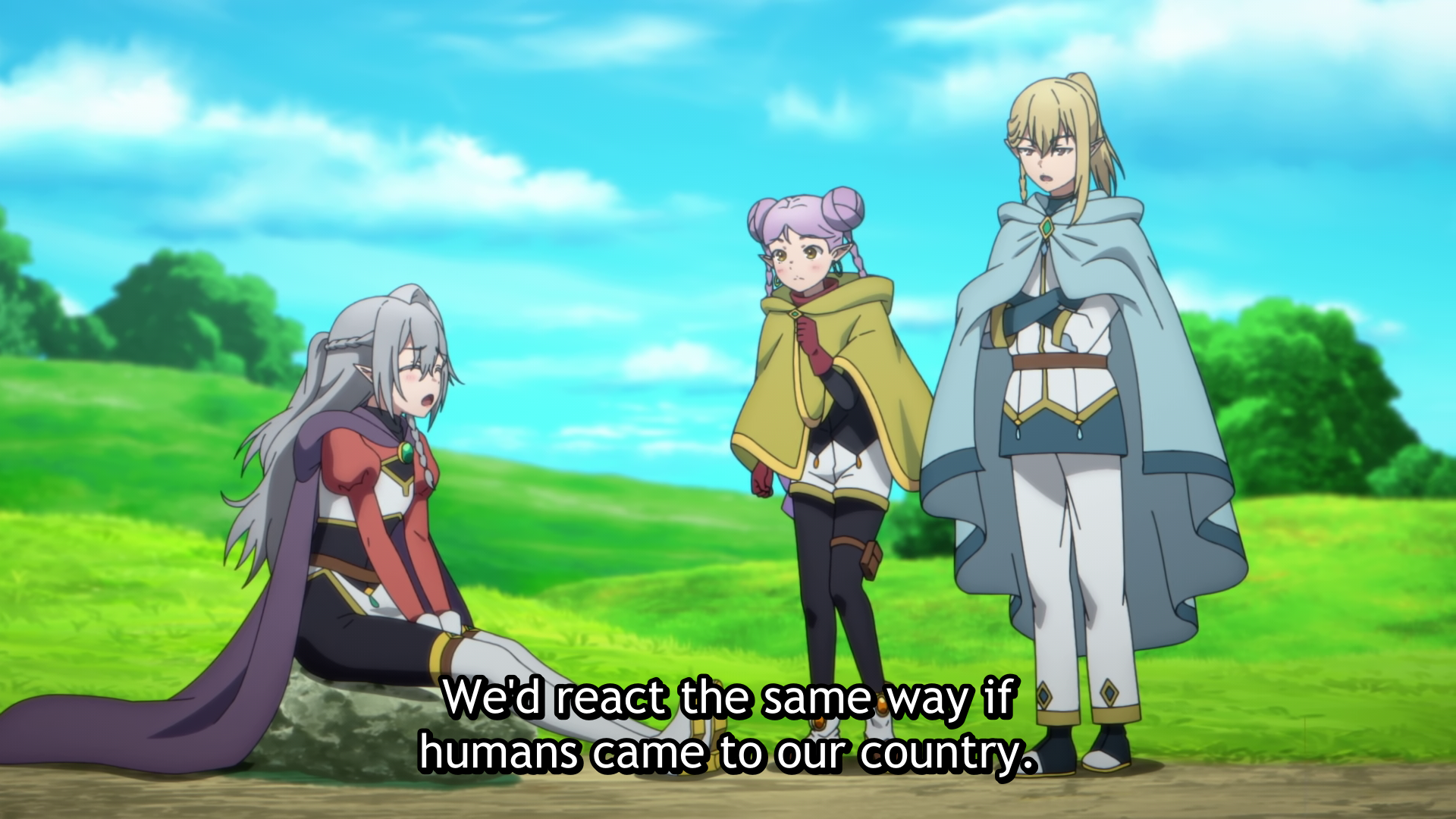
 Tessia herself, the elf princess who Arthur spent much of season one befriending, is going on adventures of her own, taking up the challenge issued at the end of the last season. Elf-human relations are still very much not good, but some local kids really want this wild boar taken down, as it’s causing too much trouble. We get a lengthy fight which makes substantial use of stat-boosting magic to compensate for Elf physical weakness – it reminds me about how wizards are extremely powerful in at least some editions of Dungeons and Dragons, with the so-called “Batman Wizard” strategy. No wonder the powerful human Wykes family, from which we meet a member in the 2nd episode, is intermarrying with elves!
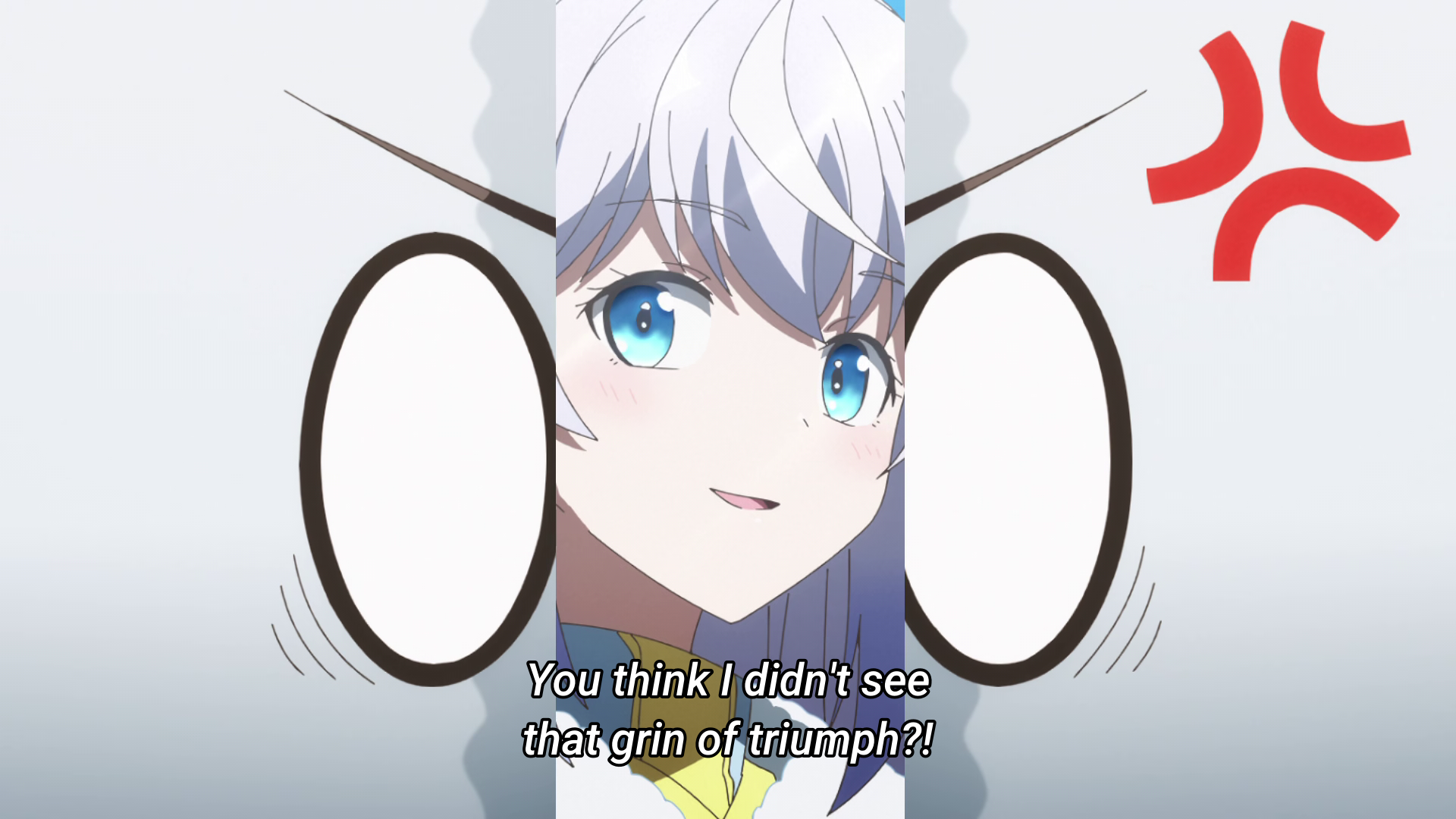
Anyway, we also learn there’s a shadowy plot behind the boar, attempts to interfere with the current peace by making attempts on Tessia’s life, and Tessia’s jealousy as she learns her party members have all met Arthur more recently – but a reunion will have to wait for later in the season.
Jidou Hanbaiki ni Umarekawatta Ore wa Meikyuu wa Samayou is the lone 3rd season of this spring’s isekai offerings. (Unless you count Digimon Beatbreak, but that runs continuously and is mostly set on Earth). It’s not a title you’d expect to be popular enough to get one, as one might think the sheer absurdity of the concept would wear dry after enough time. But the execution is good, the characters are likable, there’s more variation in the idea of vending machines than one might initially think, and Hakkon’s past life knowledge puts him in a great position to bring it out.
The first episode begins with a celebration for last season’s victory, complete last season’s snow child, Kikoyu, taking on the role of rival merchant.
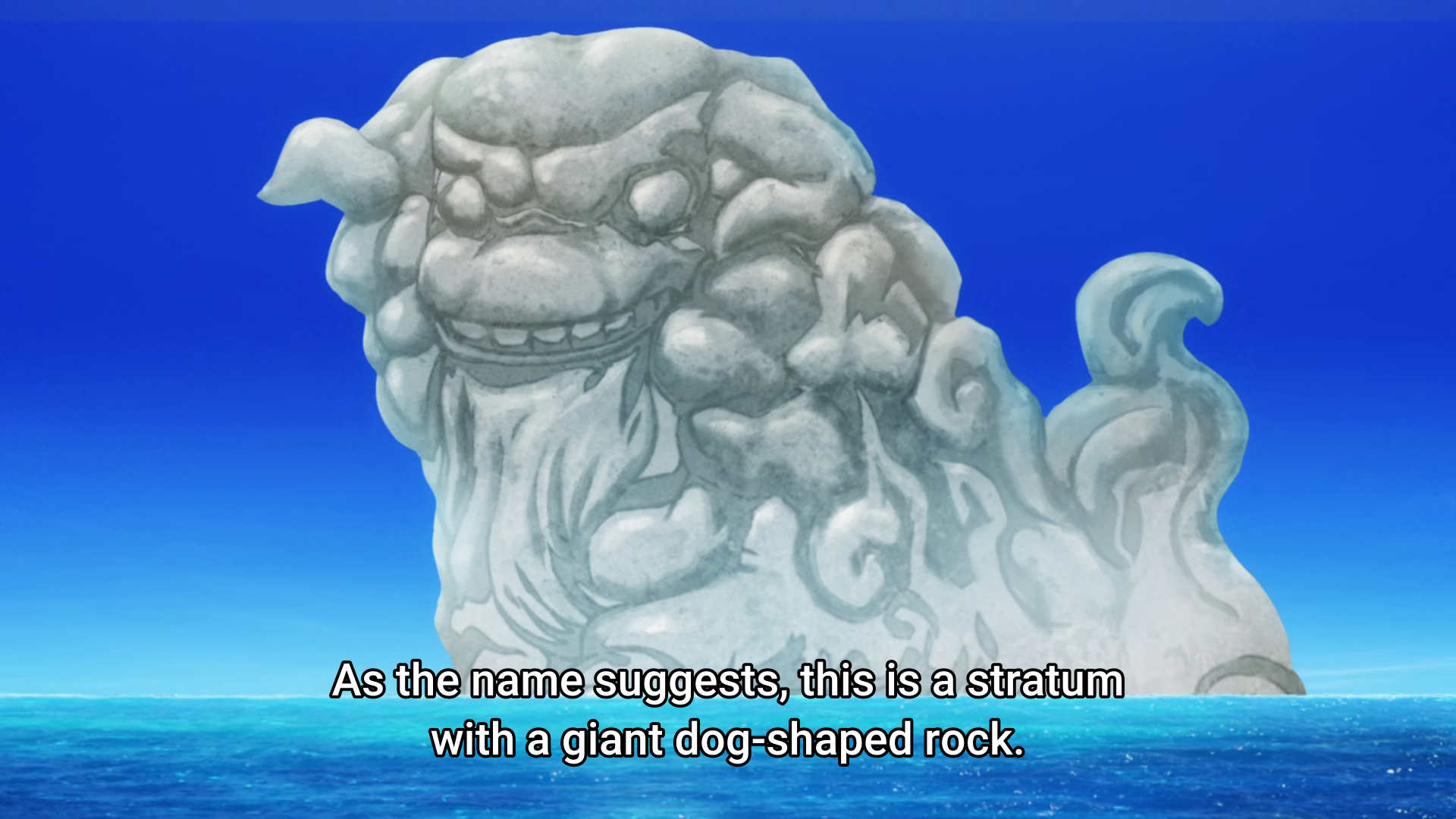
 And then it’s off to the giant dog stratum for a beach episode… or at least a beach setting, there’s still fighting and a clam to fish up.
 They fish up a girl, Pity, hiding inside a giant clam shell. This is a very useful thing to have for a hikikomori character, I want one.
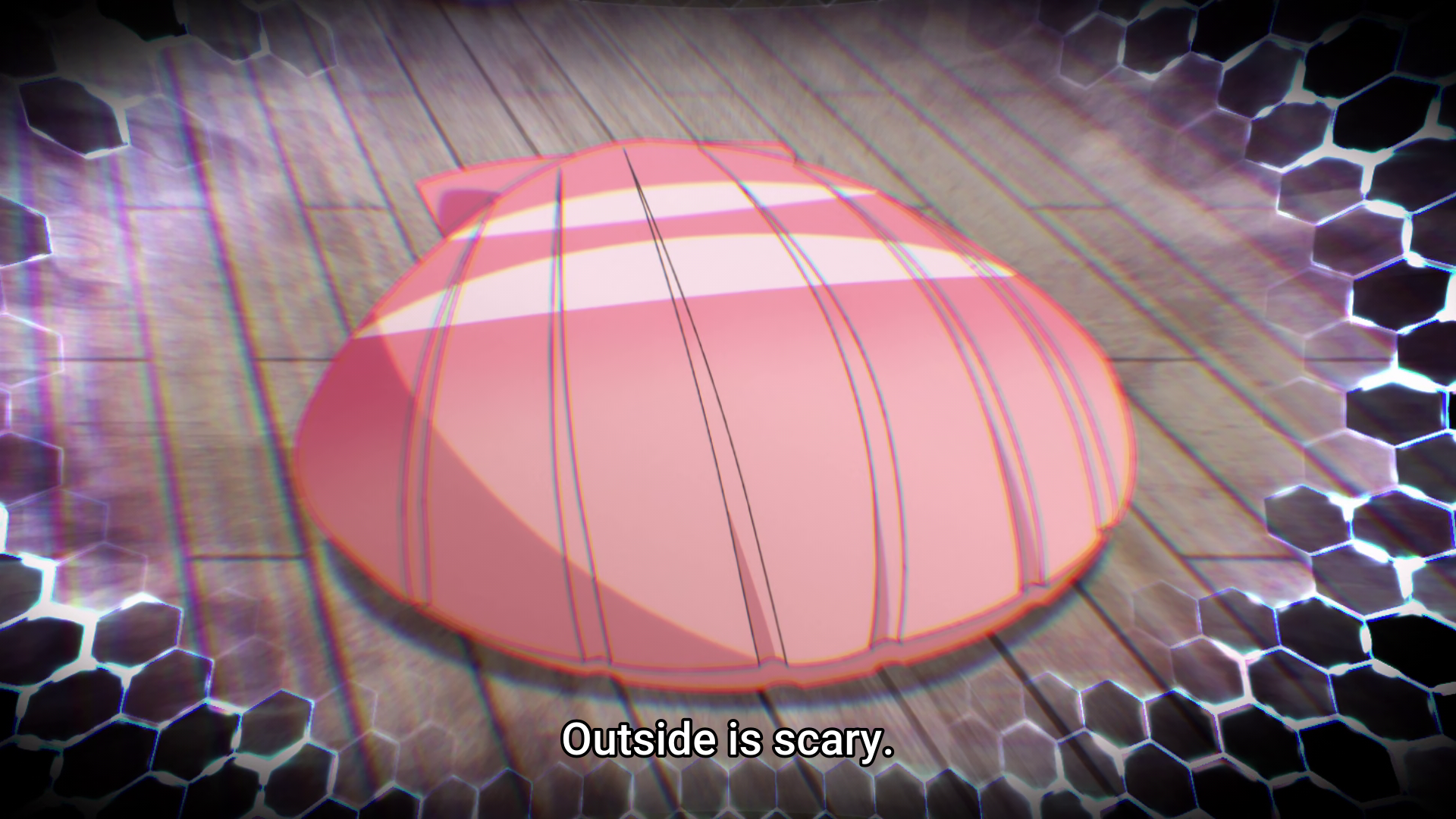 They run into the Menagerie of Fools from last season – although those guys betrayed the group, they did it to save their son, and a poll from the stratum dwellers supports forgiving them if they apologize.
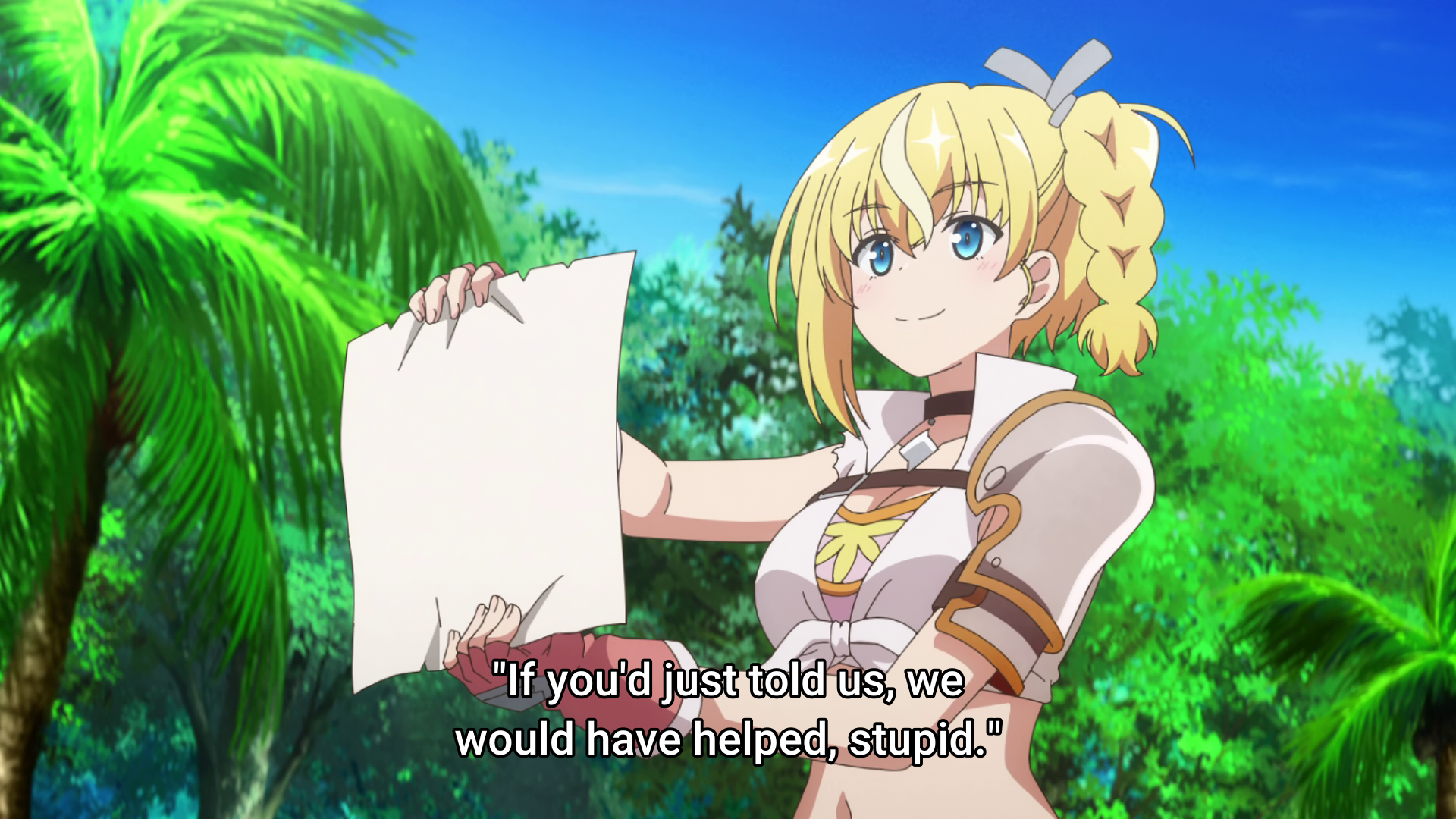 And then the group fights another snow spirit, who is holding the menagerie’s son hostage; his pain will return if they part, so it’s yet another fight against the snow spirit and the Menagerie of Fools.
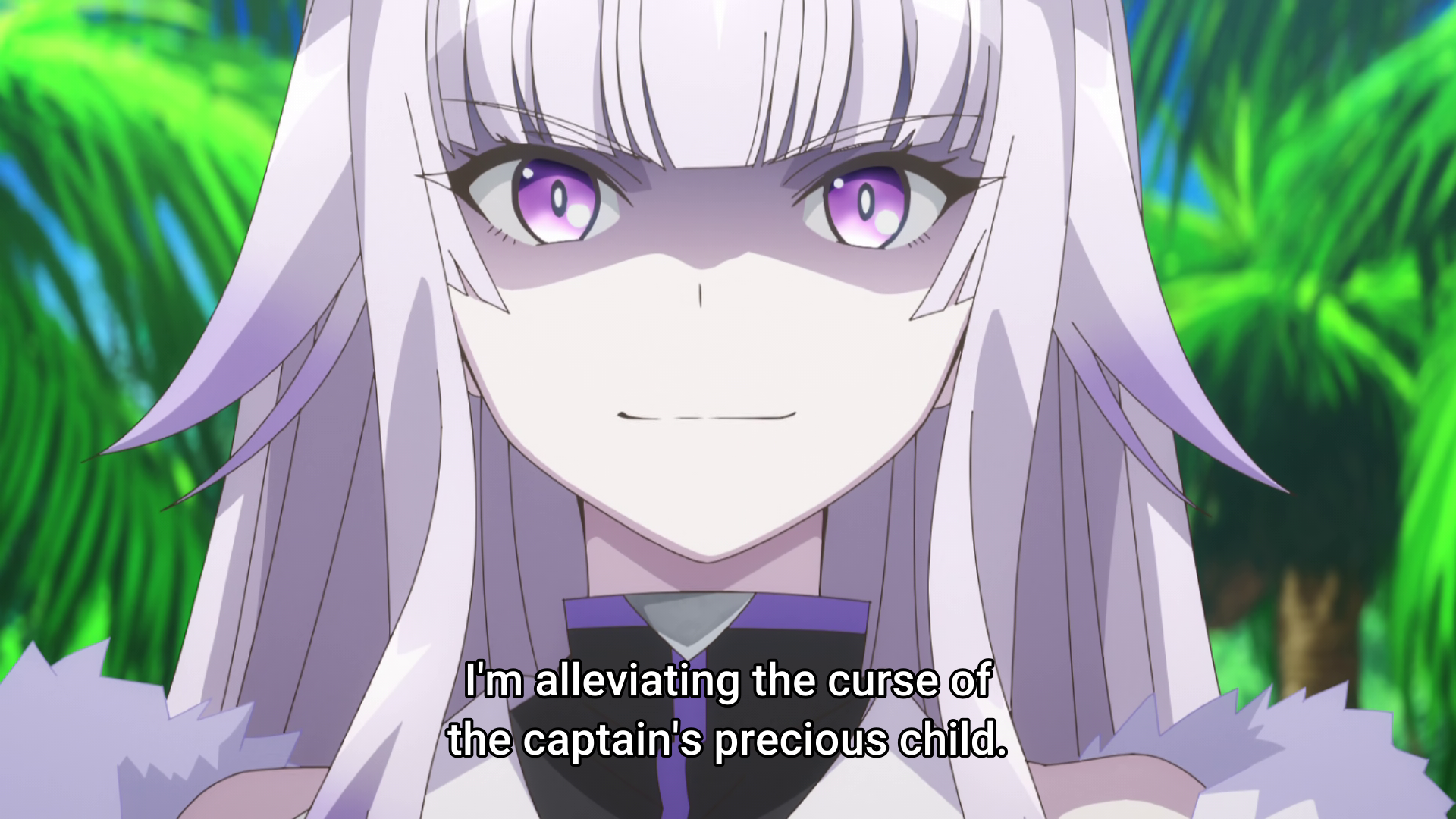 Hakkon is using barriers and the soda/mentos combination, I always appreciate how differently he fights from every other isekai protagonist, but he still gets frozen at the episode’s end. Will he be okay?
Honzuki no Gekokujou: Shisho ni Naru Tame ni wa Shudan wo Erandeiraremasen - Ryoushu no Youjo, the 4th season of this franchise, unfortunately, is seriously marred by the use of an image in its opening theme which was generated with the use of artificial intelligence.
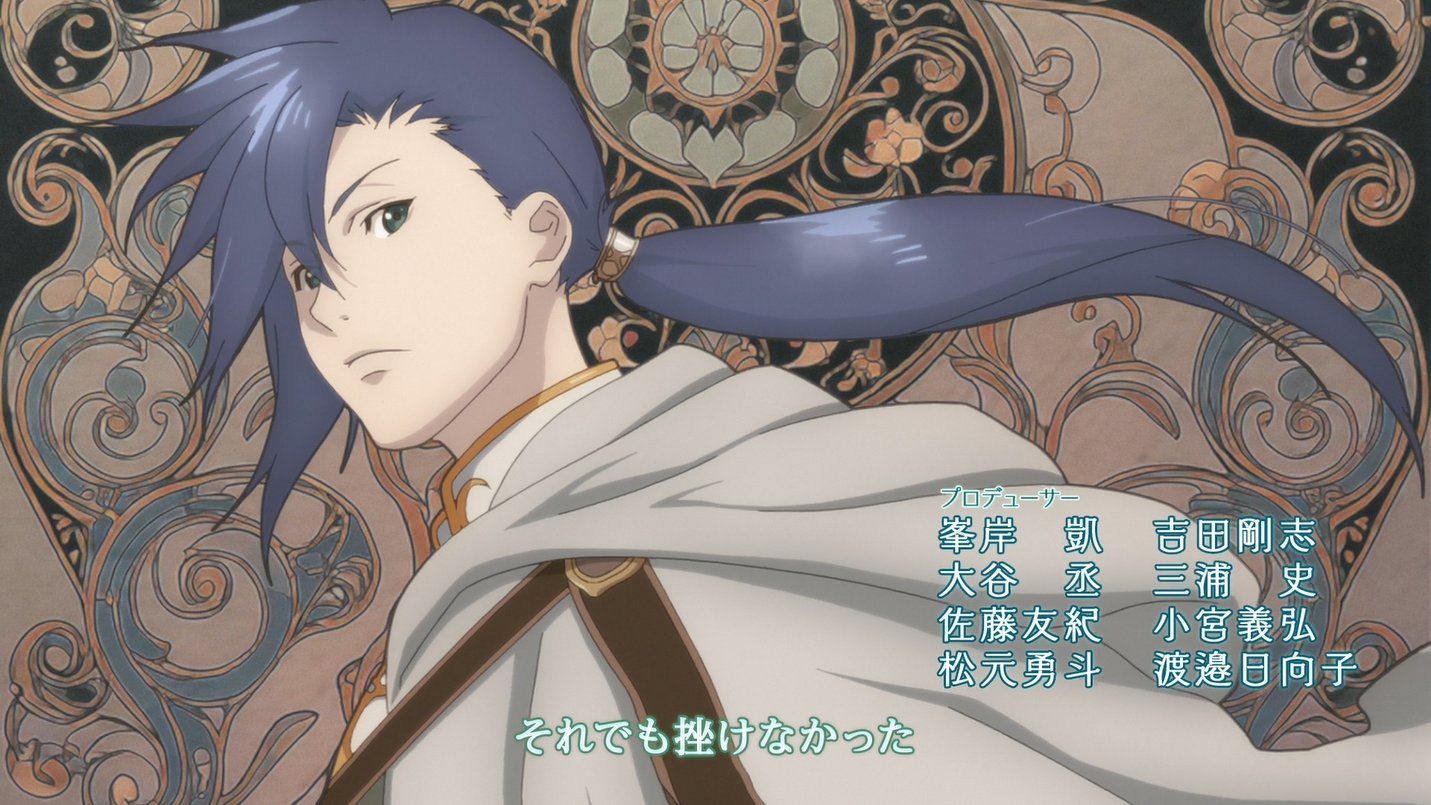 One might hope that the use of AI would remain restricted to backgrounds and other relatively unskilled aspects of animation, freeing up actual human beings to do more important work, in a process akin to the industry’s shift from hand-drawn to computer animation, with a set division of labor.
However, this limitation only reflects the present state of the technology; I am aware of no theoretical reason why it could not further improve, and immense investment is pouring the field from both major technology corporations and the governments which preside over the world’s largest economies. One might seek hope in the signs of a financial bubble in the field, but this is likely to only slow down, not prevent, the pace of the technology’s growth; the collapse of the dot-com bubble did not erase the internet, after all.
Worse, there is always the potential for recursive self improvement, at which point no human could stop it; the recent rise of “vibe coding”, for all its limitations, is a deeply disturbing sign that this point might not be very far away.
Artificial intelligence is a threat to every job not only in the anime industry, but to the manga and light novels from which so many of them, including Honzuki no Gekokujou, are adapted, and to many other fields; fans and animators alike need to take a stand and stop its adoption in anime, before it is too late.
I am frankly disgusted with this whole situation; I’ve quite enjoyed Myne’s show, she deserves better, and I very much hope the opening theme will be revised for the remainder of the season; if it is not, I’m not sure if I have the stomach to continue, and it’s only my existing attachment to the first three human-made seasons which makes continuing even a possibility. Actual human beings wrote her story and performed most of the work in adapting it to animation and it’s awful to see their hard work tarnished.
After the opening theme, Honzuki remains an intriguing story; one often reads about elite adoption in history books, although less commonly in medieval Europe, which this title otherwise pulls from, than in antiquity on that continent. It was also ever-present in Japanese history; for example, four of Oda Nobunaga’s sons were adopted by Toyotomi Hideyoshi, and two more were adopted as heirs of the Kanbe and Kitabatake clans. However, the hostage system, which similarly separated children from their families, remained in common use.
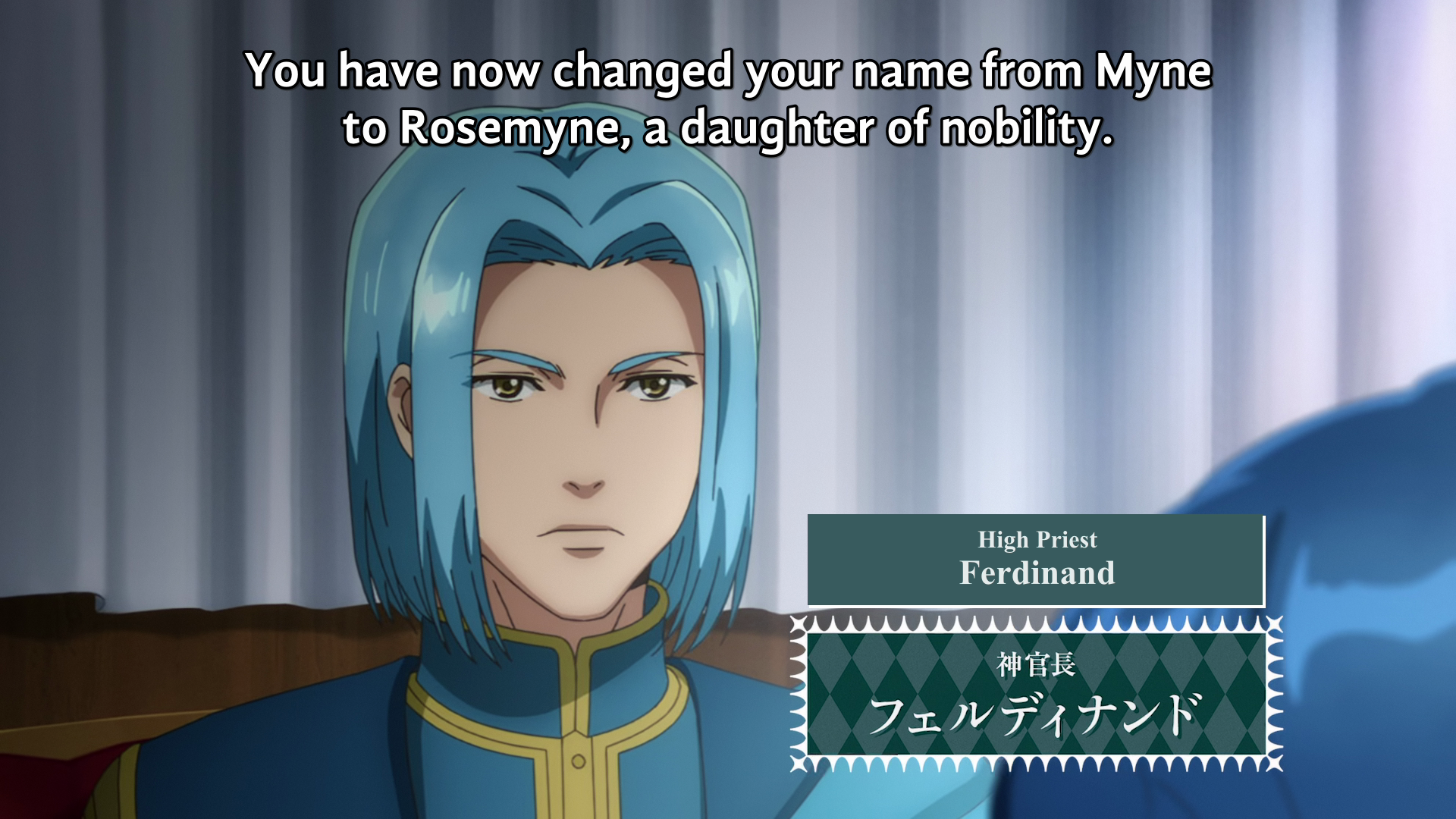
Myne, who must now take the name Rosemyne, very much feels the human cost of this system, crying during the preparations for her baptism ceremony because of a hair ornament from her old family, and much of the episode introduces her new one. Still, she’ll do anything to make books.
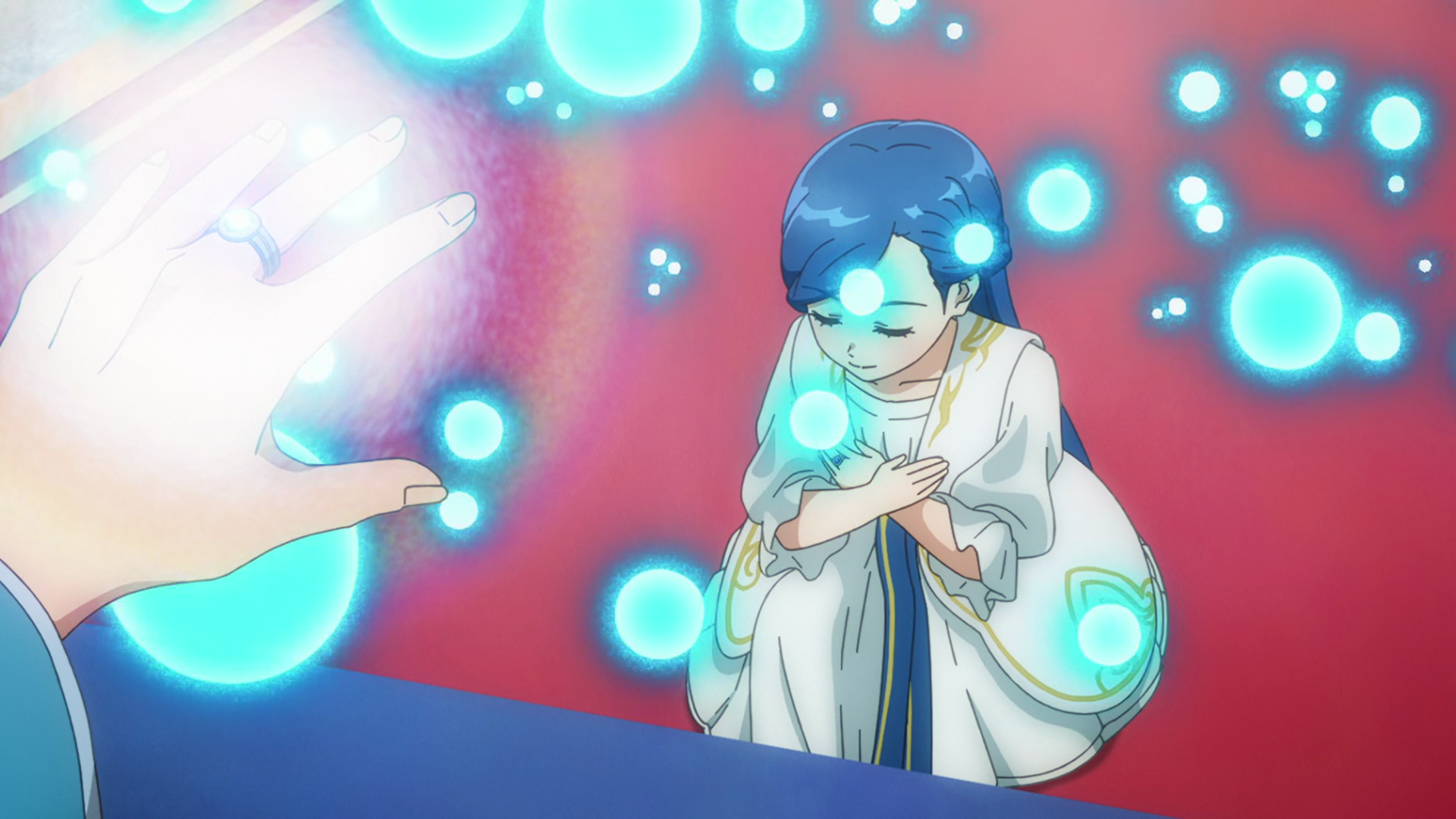
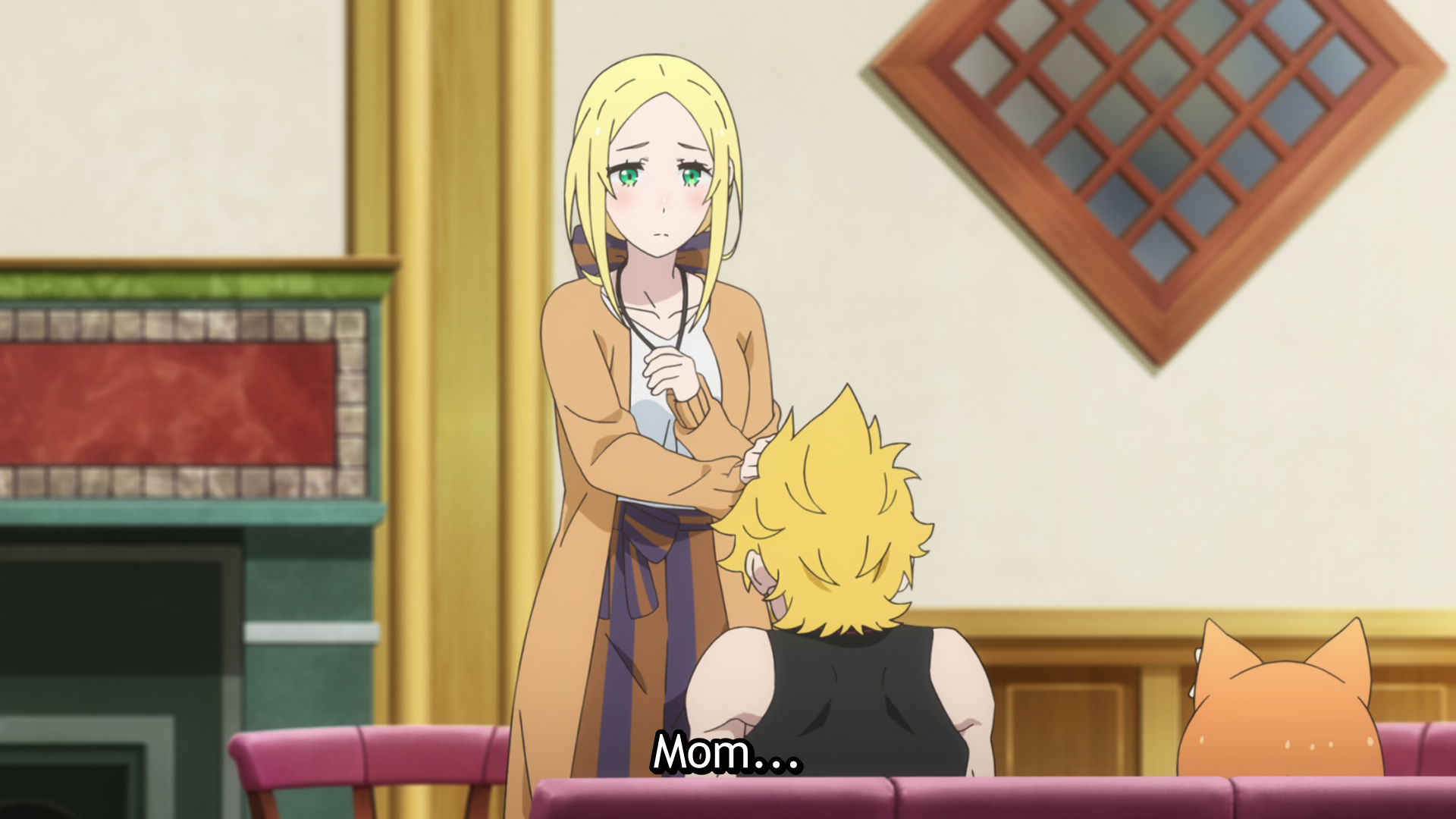
At the episode’s end, after receiving a fire god’s blessing and getting dragged off to play, she collapses into a trail of blood.
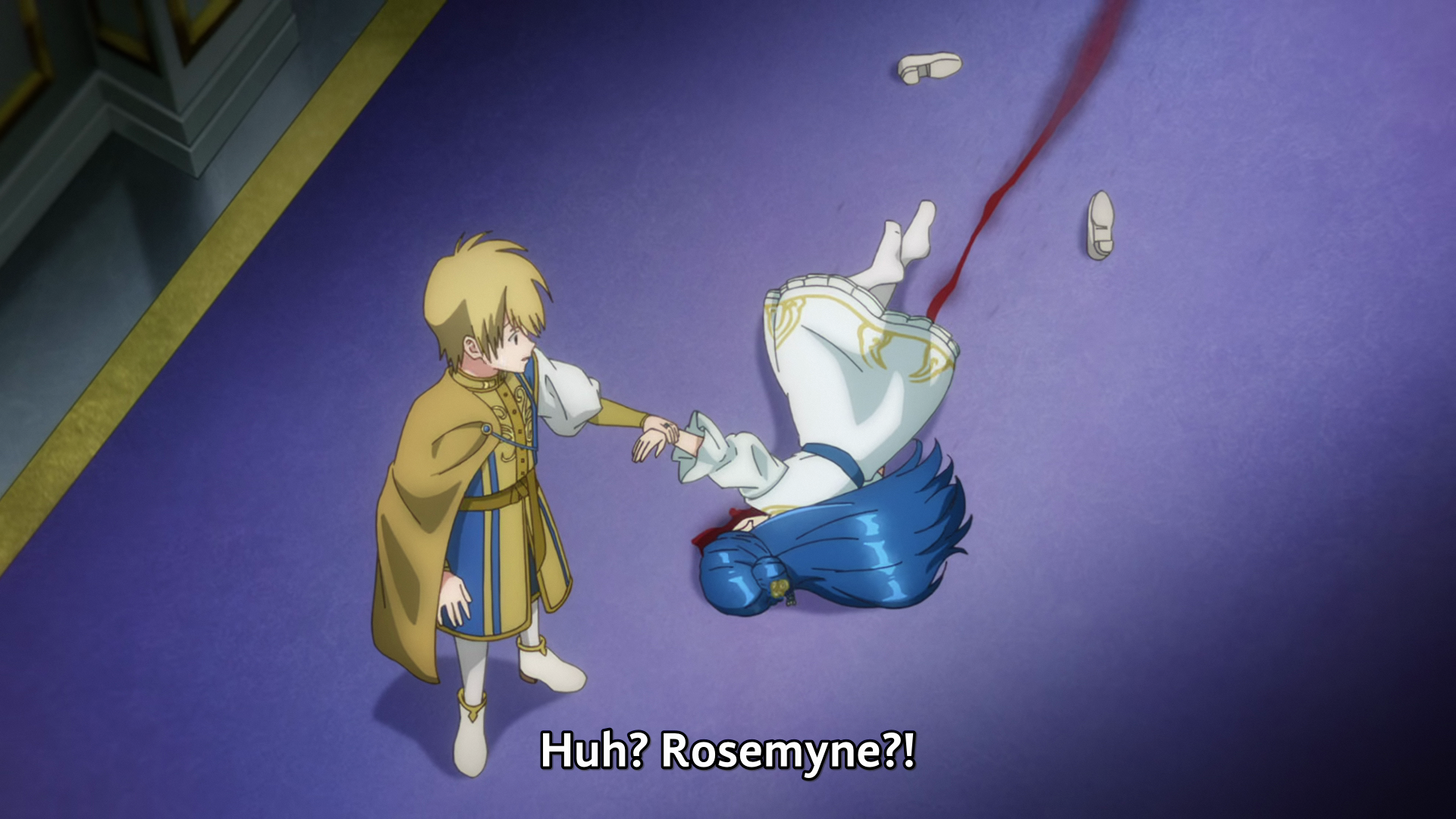
The fourth season of Mairimashita, Iruma-kun! introduces a new character, Purson, who is extremely shy, prone to talking fast, and has remarkable skill with the trumpet. That last part could greatly help the Abnormal Class in their efforts to rank up to Dalet at the school music festival and thereby avoid expulsion, if only he can be convinced to participate.
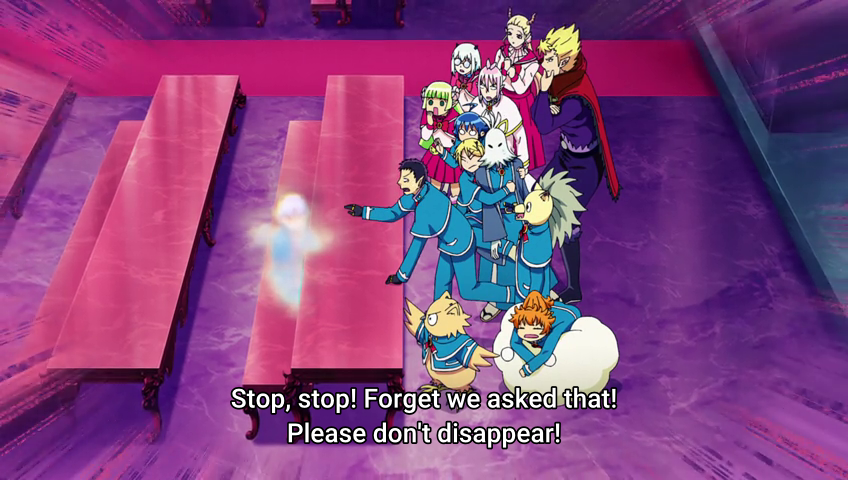
He’s very shy, but Iruma is persuasive.
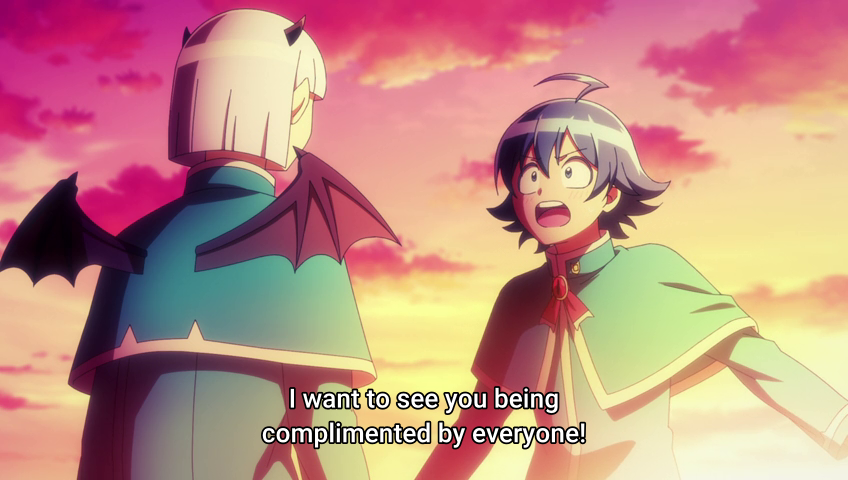
Unfortunately, we don’t get much in the way of human-netherworld relations or anything, at least in the intro to this arc, but I still like seeing more of Iruma’s adventures.
Tensei shitara Slime Datta Ken is not only entering its 4th season, it gets 24 episodes a season. This title regularly tops the light novel sales charts, for good reason – it’s a charming title with a likable cast of monsters, and a main character who goes from a pathetic slime to a demon lord in the interests of protecting his forest settlement.
And the dungeon arc, which this season continues to adapt, is really TenSura at its finest – humans and monsters working together to create something all too familiar to fantasy fans, but genuinely innovative within this world’s setting. We even have a secret elf bar.
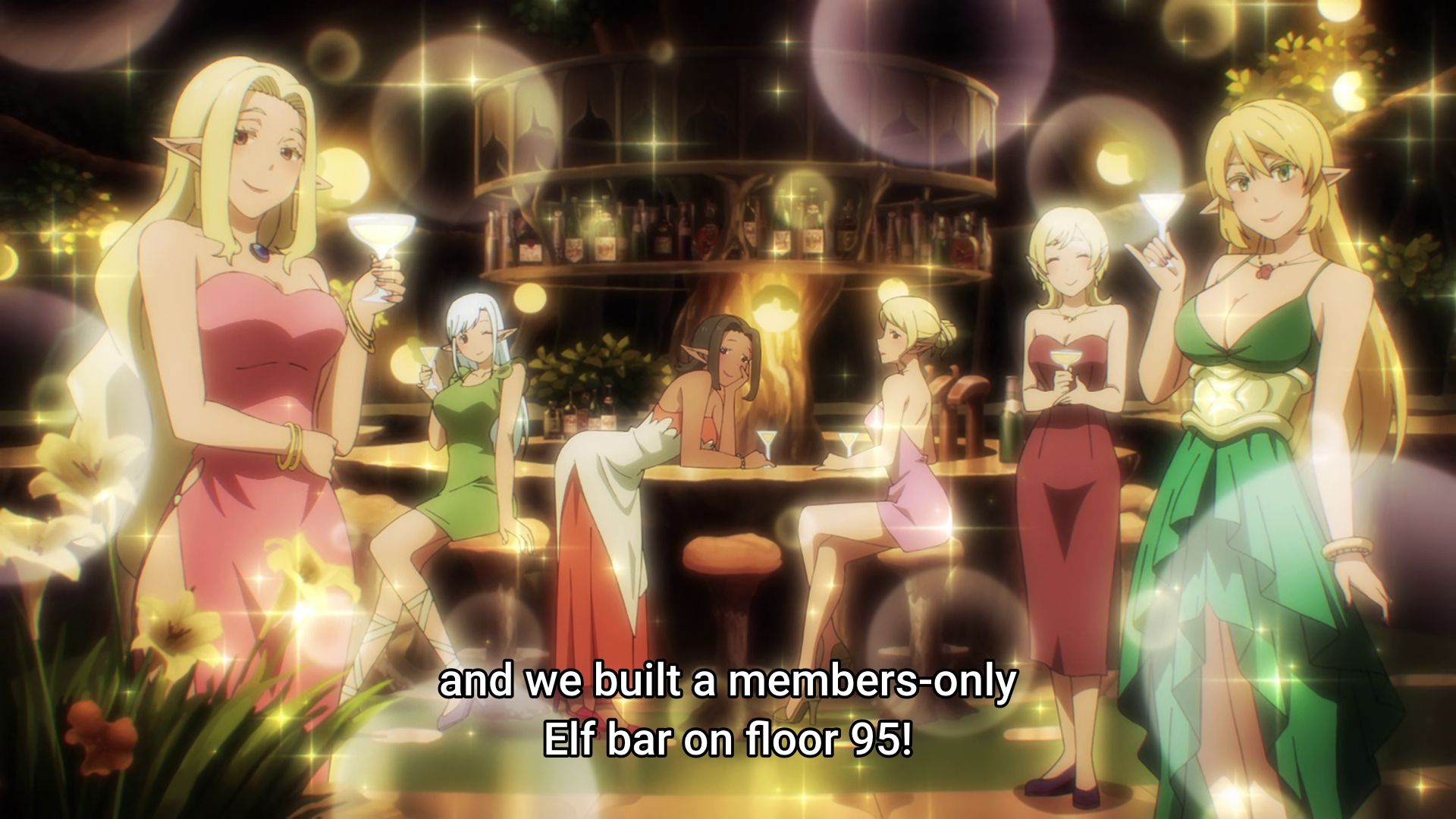
This week, it’s finally open, but they made it too difficult – they made 100 floors, but no one can make it past floor 10!
Maybe if a hero promotes the dungeon for them, stronger adventurers might show up… you seeing this, Masayuki?
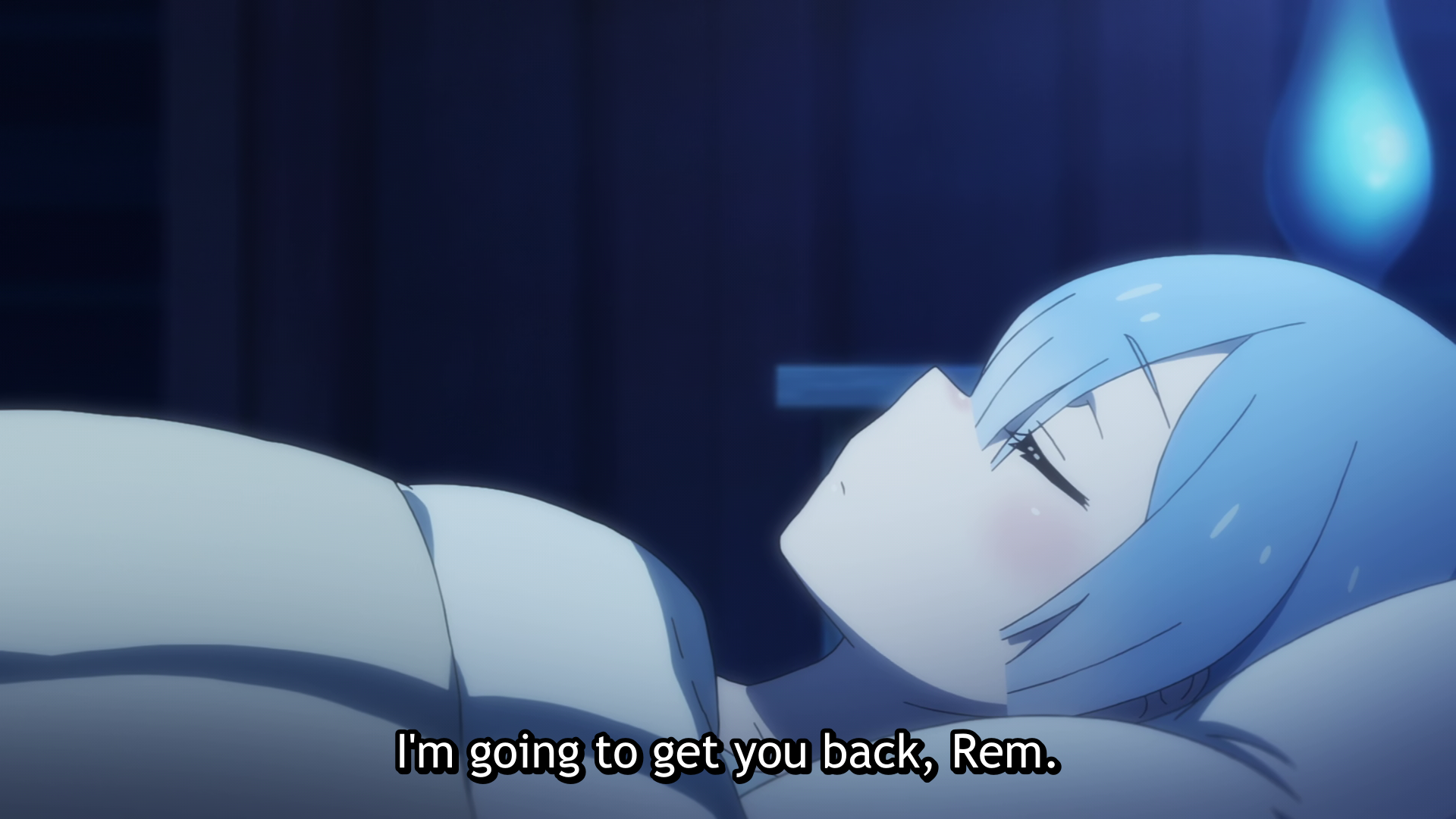
Re:Zero kara Hajimeru Isekai Seikatsu returns for a fourth season as well this summer, and also moves the story along with no refreshers for anyone who went over a year without watching this show. The water gate city of Priestella is still in ruins from last season’s battle with Gluttony. Then again, memory’s a theme of this title, and Julius has sadly been forgotten, except by Subaru, although he’s still conscious. If that sounds awful, well, suffering is also a theme when it comes to Re:Zero.
So they’re off through the dunes of Auguria to meet Shaula the Sage, a hero of an earlier adventure, in the hopes she can help. One of the other succession candidates, Anastasia, is possessed by a character named Echidna – but it’s a fox spirit, not the witch Subaru fought earlier, but someone else of the same name. They’ll be working together to reach her. Meili will be joining them as well – she’s spent too long cooped up in the castle. If nothing else, Subaru’s determination to save Rem, after all this time, is still unshaken. I know it’s the overall goal of his quest, but there’s still something impressive about it, after all he’s been through.
 And Garfiel’s still crying and being reassured by his biological mother, who doesn’t remember this fact. This show really doesn’t stop hitting the audience with blow after blow, huh? ;_;
Finally, episode 25 of Digimon Beatbreak is set entirely on Earth, and even the battle does not place in the Mirror World (much to the chagrin of Glowing Dawn, which is billed for the damage in the fight). On the whole, the anime has been slow to make use of its other world, but its nineteenth episode did show that there are some humans entering it… for human and digimon trafficking, something more like a dark web black market than the internet we know and love.
Also they rode a Komondomon to get there. Good(?) dog. I liked its role in Digimon Adventure: more, but I guess you can use it for carrying around slave traders, not just the Chosen Children.
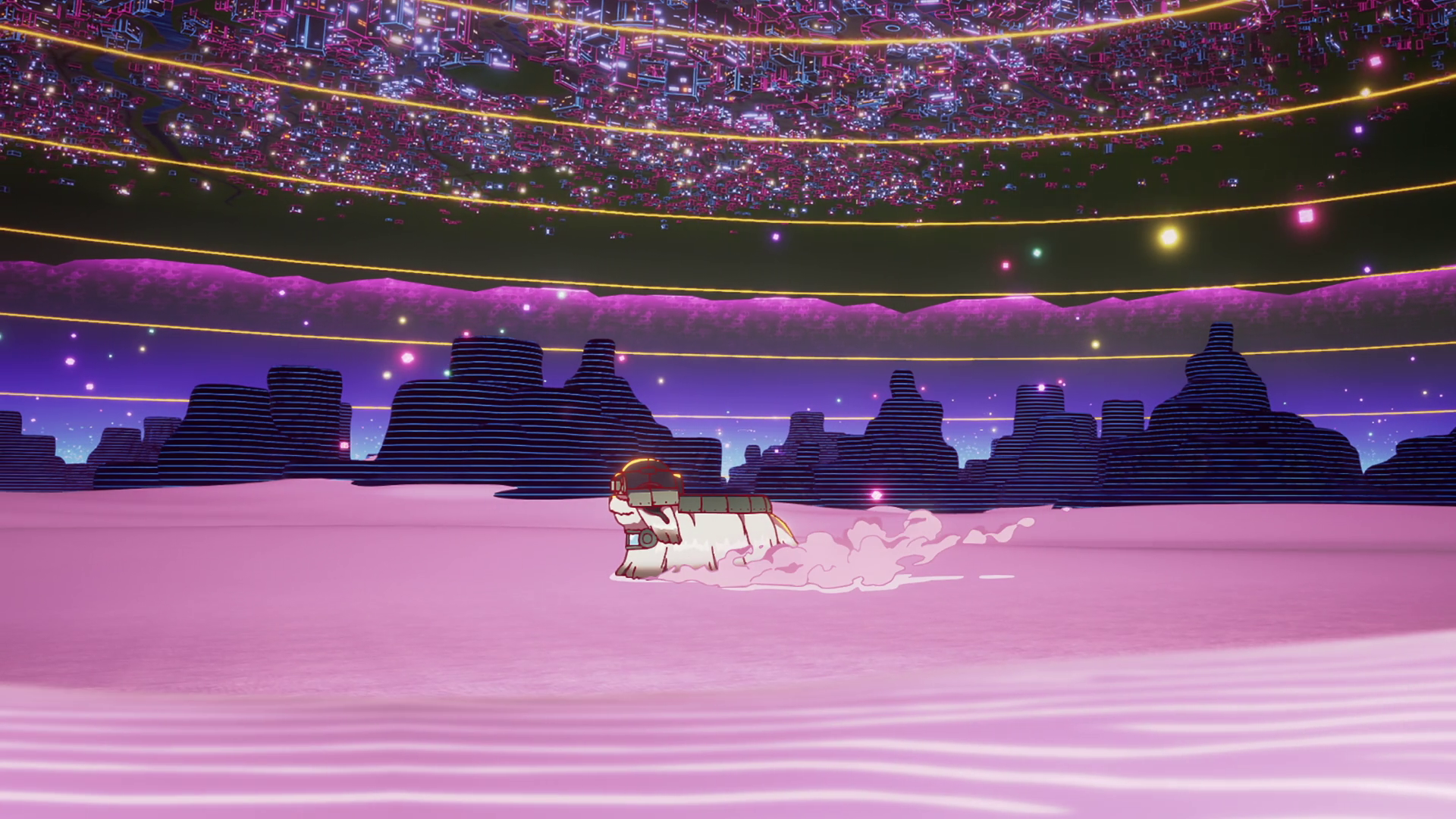 I’m still hoping to see more of what’s going on in the Mirror World before Beatbreak ends. But even if I don’t, there’s still 11 other worlds to explore!